

Engineering & export notes.
Practical guides on specifying, finishing, sourcing and shipping industrial metal, written by the people who make it.
India's Cable Tray Manufacturing Sector: A Buyer's Sourcing Guide
A structured look at India's cable tray manufacturing landscape, covering where the production clusters are, what certifications to demand, and how to evaluate a factory before placing an export order.
Cable Tray Manufacturer in Kolkata and Howrah: Factory Direct Sourcing
A sourcing reference for project buyers looking at cable tray supply from Kolkata and Howrah. Covers the geography, what factories actually make here, and how to engage a West Bengal manufacturer directly for export orders.
Ladder Cable Tray vs Perforated Cable Tray: Selection Guide
A side-by-side comparison of ladder and perforated cable tray covering load capacity, ventilation, cable type suitability, installation cost, and the IEC 61537 requirements that apply to each. Use this guide to confirm your selection before specifying to project drawings.
Cable Tray Sizing Guide: Width, Depth and Fill Ratio Calculations
A working guide to cable tray sizing, covering width selection by cable schedule, depth by load class, fill ratio limits under IEC 61537 and NEC, support span calculation, and the adjustments required for mixed voltage and mixed cable-type runs.
IS 3043 Earthing Standard: A Practical Compliance Guide
IS 3043:2018 is India's primary earthing standard, covering electrode selection, earth resistance targets, earthing conductor sizing, and inspection requirements. This guide translates the standard's clauses into practical compliance steps for substation and industrial plant engineers.
Cable Tray as an EGC: NEC 392.60 Grounding Requirements
Cable tray can serve as the equipment grounding conductor under NEC 392.60 when its sections and fittings are identified for grounding. The full criteria.
Cable Management for Solar EPC Projects: Tray Sizing, Routing and Grounding for Utility-Scale PV Plants
Utility-scale solar imposes specific demands on cable tray, outdoor exposure, long inter-row runs, and DC + AC segregation requirements. Here is how to specify it correctly from an Indian manufacturer.
Data Centre Earthing: IS 3043, TIA-942 and What to Specify from an Indian Manufacturer
Data centre earthing is more demanding than standard commercial. 1 ohm resistance, equipotential bonding to every rack, and copper busbar earthing conductors throughout. Here is the specification checklist and what Indian manufacturers need to provide.
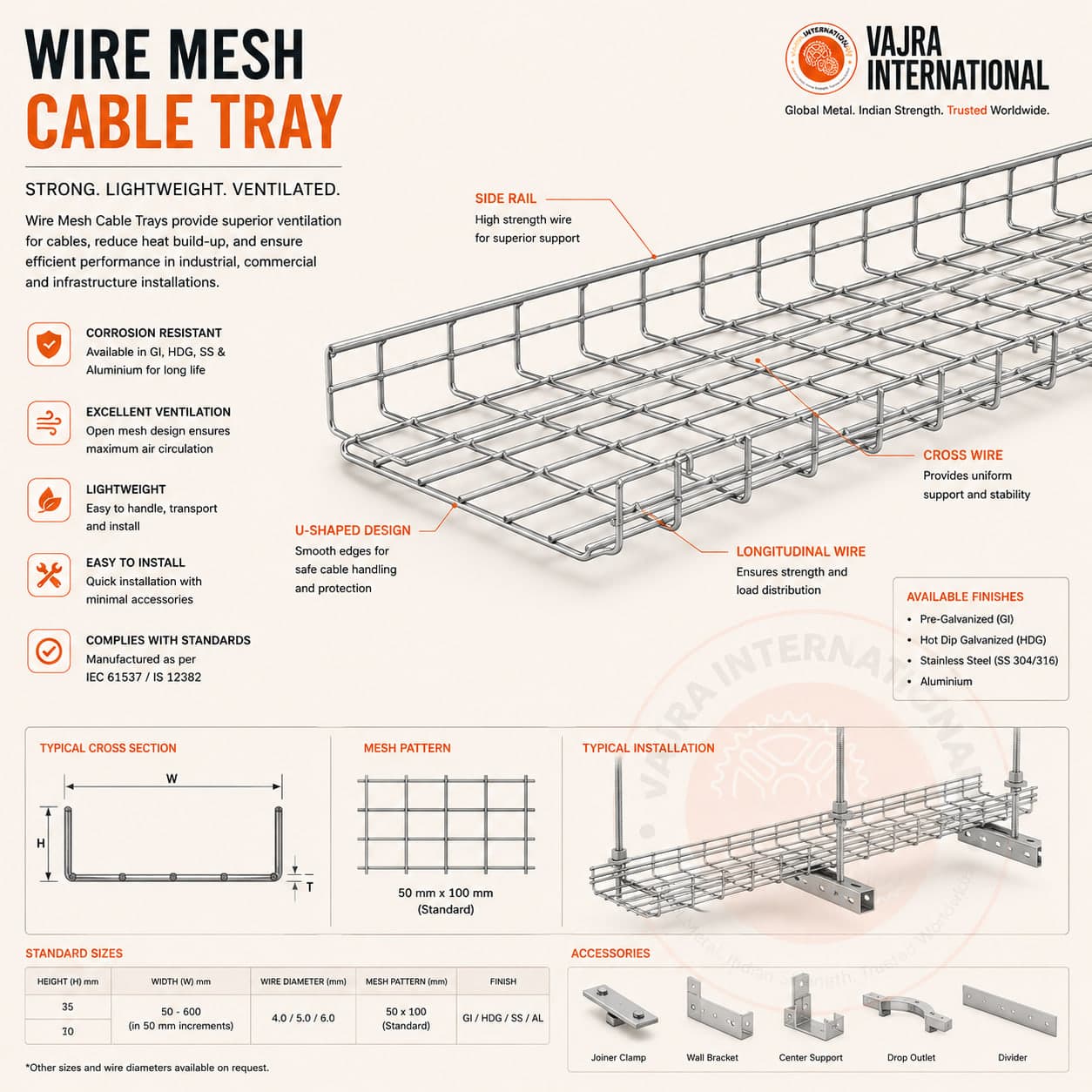
Wire Mesh Cable Tray (Basket Tray): Where It Beats Ladder and Perforated
Basket tray goes in at nearly twice the speed of ladder and shows every cable at a glance. The spans, finishes and cut-edge rules that decide whether it lasts 20 years or rusts in one.
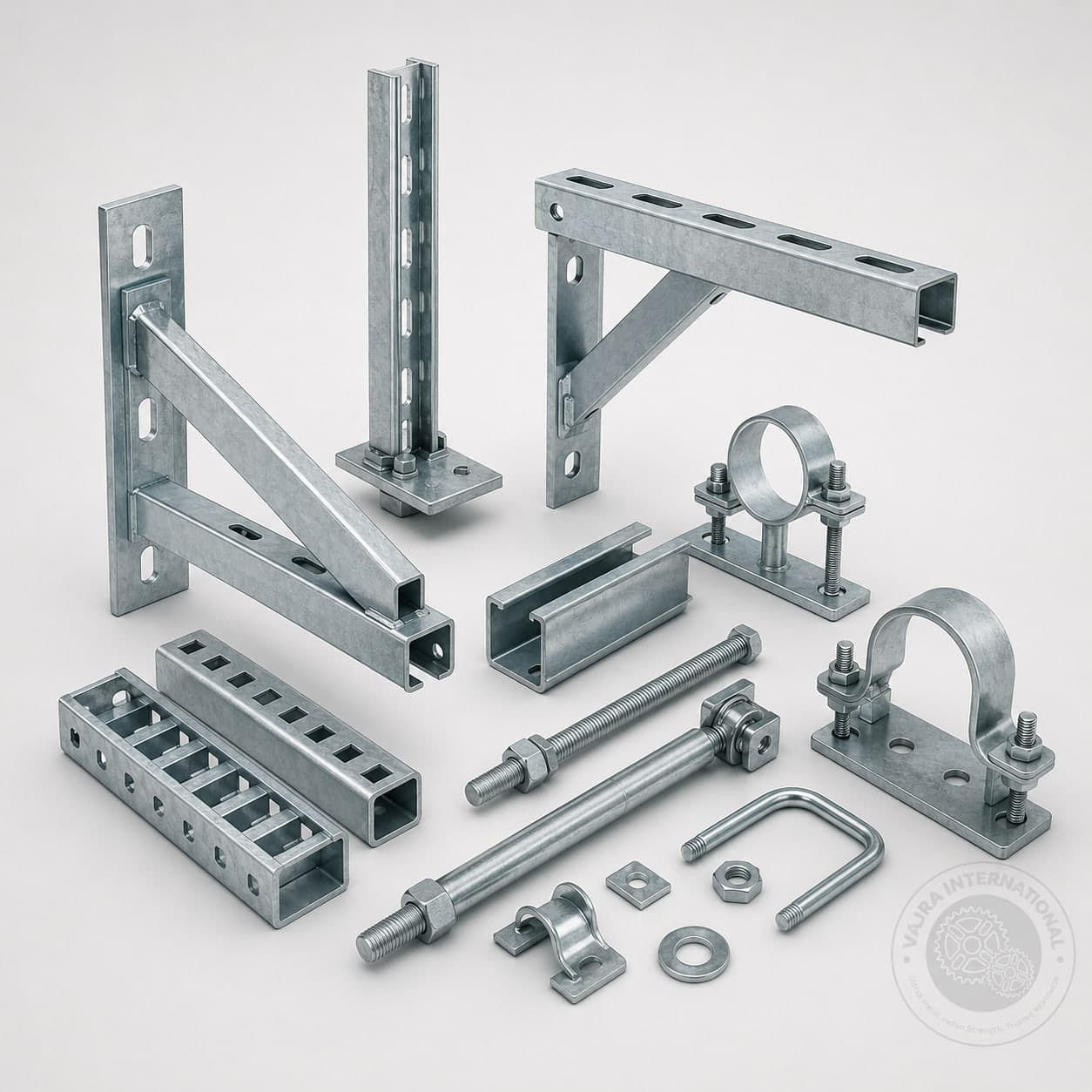
Cable Tray Accessories: The Bends, Tees and Couplers That Decide a Run
Straight lengths rarely fail. Runs fail at the bends, the joints and the finish nobody matched. A fitter's guide to specifying tray fittings so the run passes its earth test in year five.
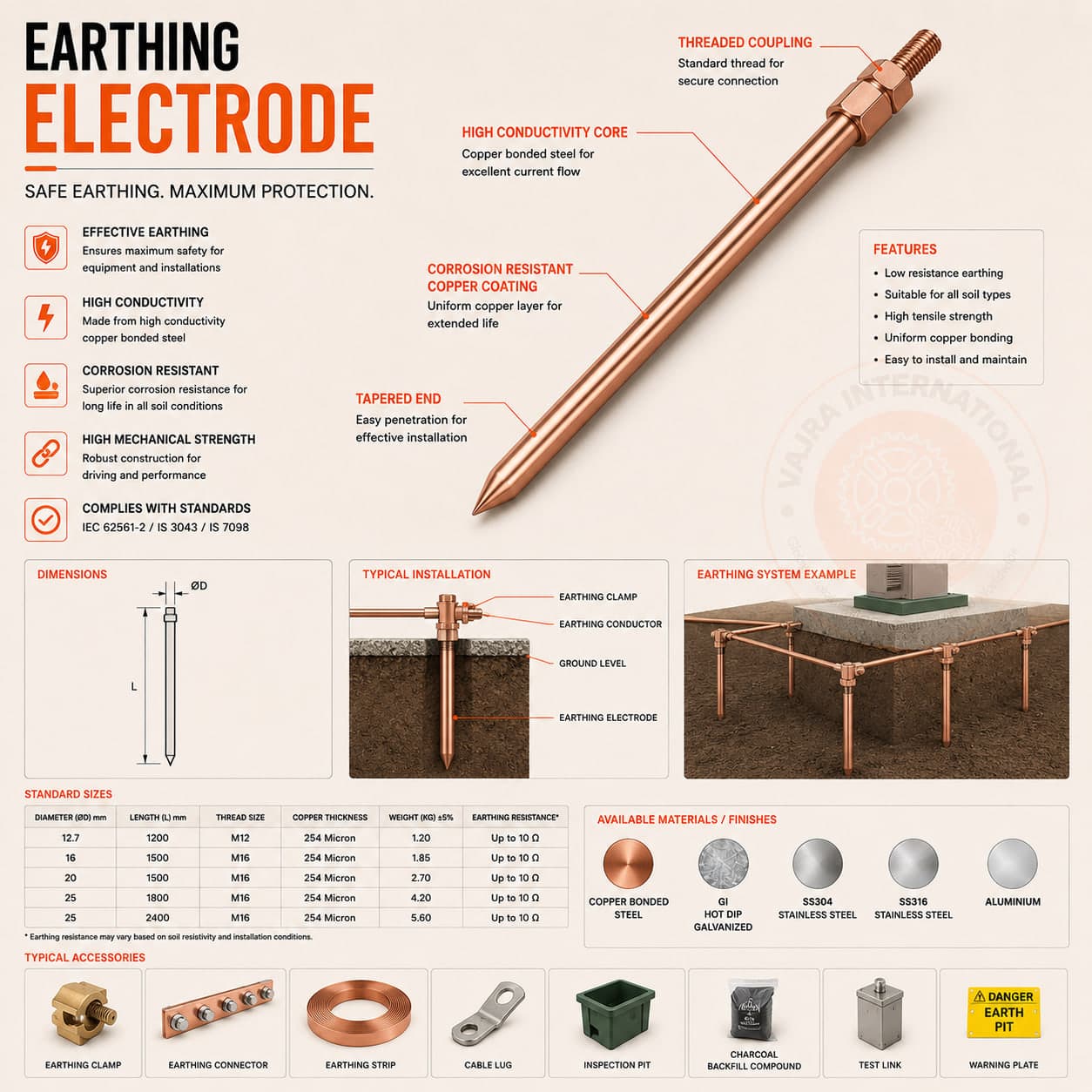
Maintenance-Free Earthing Electrodes and Backfill Compound: What Actually Lowers Resistance
Salt and charcoal give you a great reading on commissioning day and a creeping failure two monsoons later. What really holds a low earth resistance over years, and what just looks good at handover.
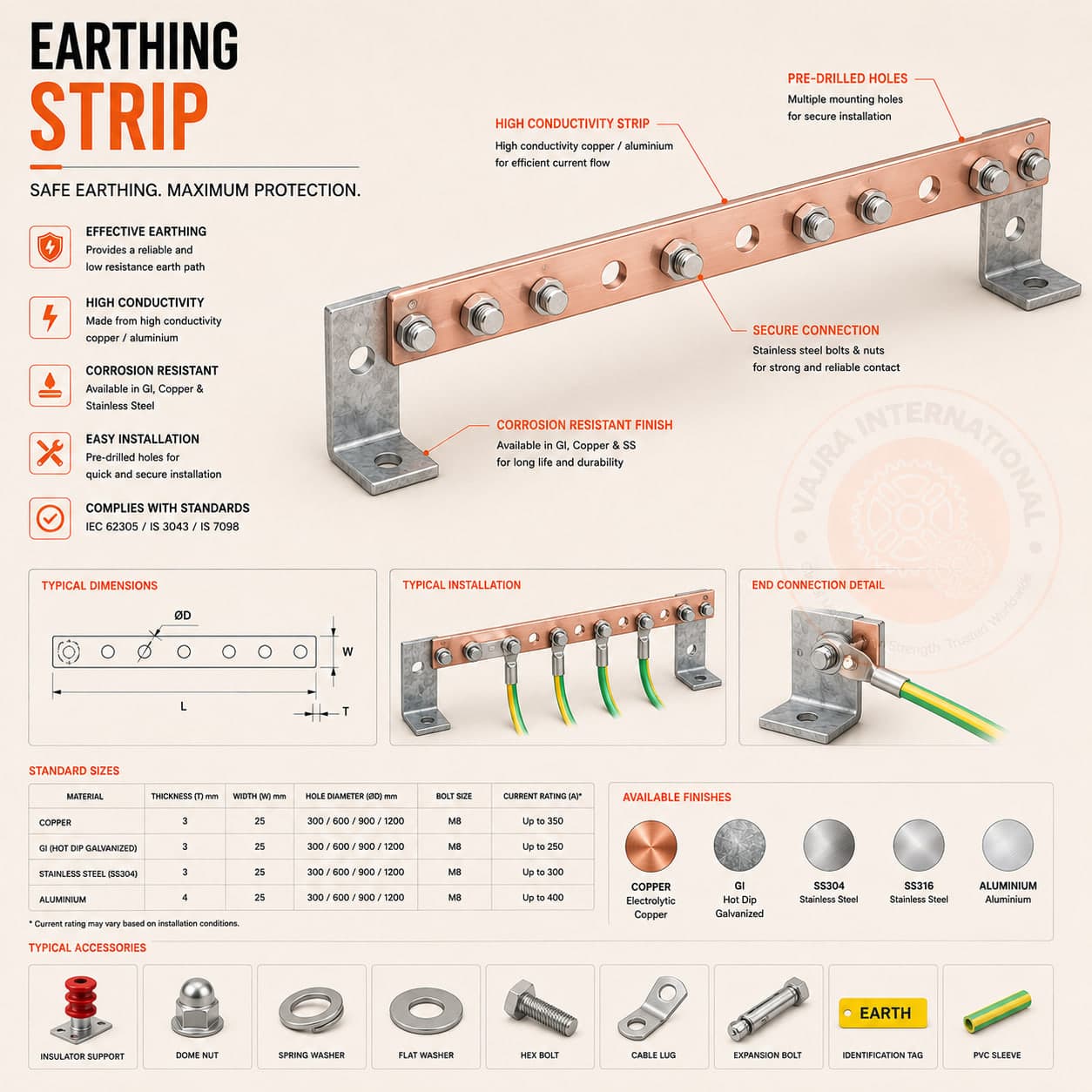
Earthing Strip Sizing to IS 3043: GI vs Copper and the Cross-Section That Survives a Fault
The earth strip is the cheapest part of the system and the one people guess at most. How to size the conductor from fault current and breaker time so it does not open-circuit when it finally matters.
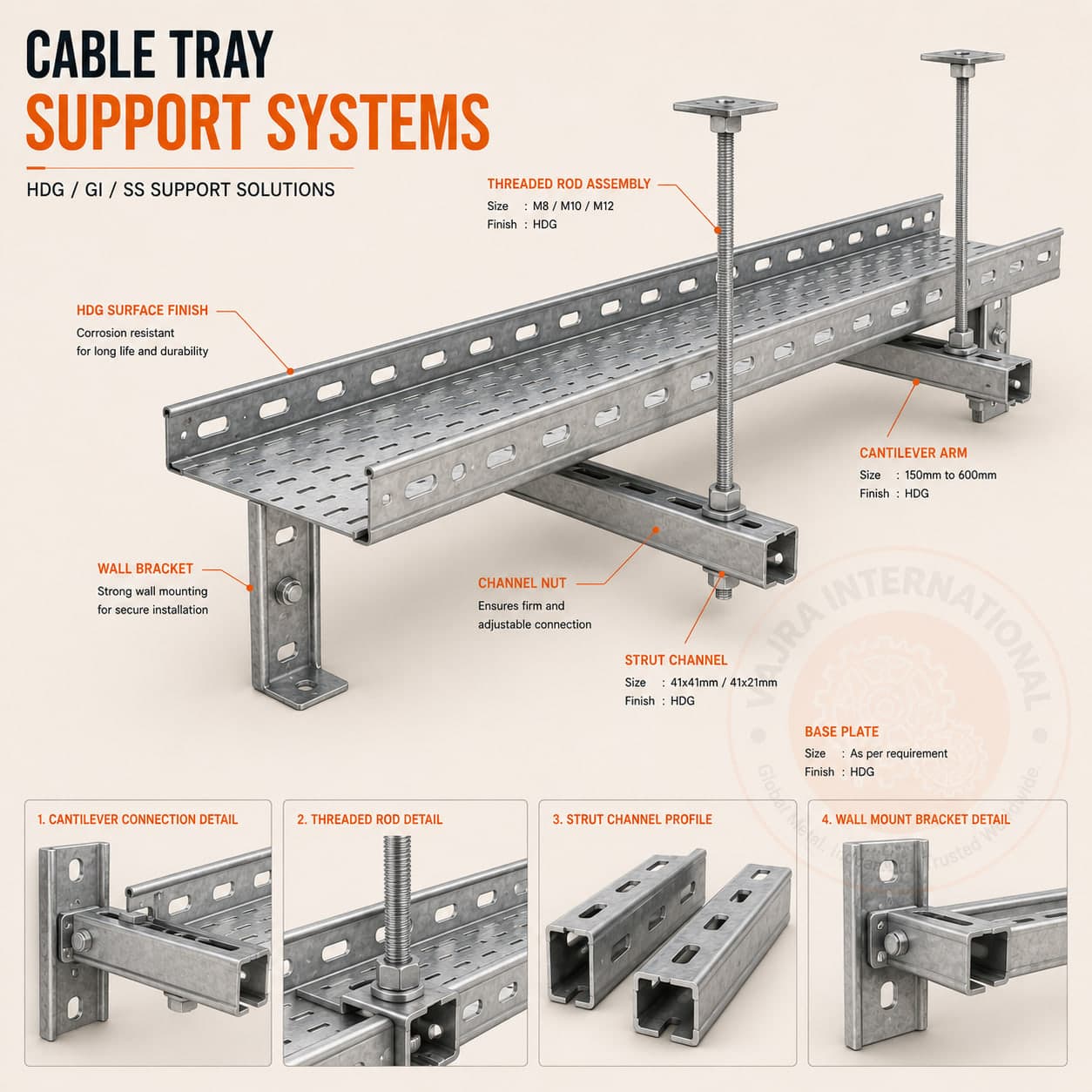
Cable Tray Support Systems: Cantilever Arms, Strut Channel and the Spacing That Holds the Run
A cable tray does not hold cable up. The support holds the tray up. When a run sags, the tray is usually fine and the bracket, the span or the wall fixing was the weak link. How to get all three right.
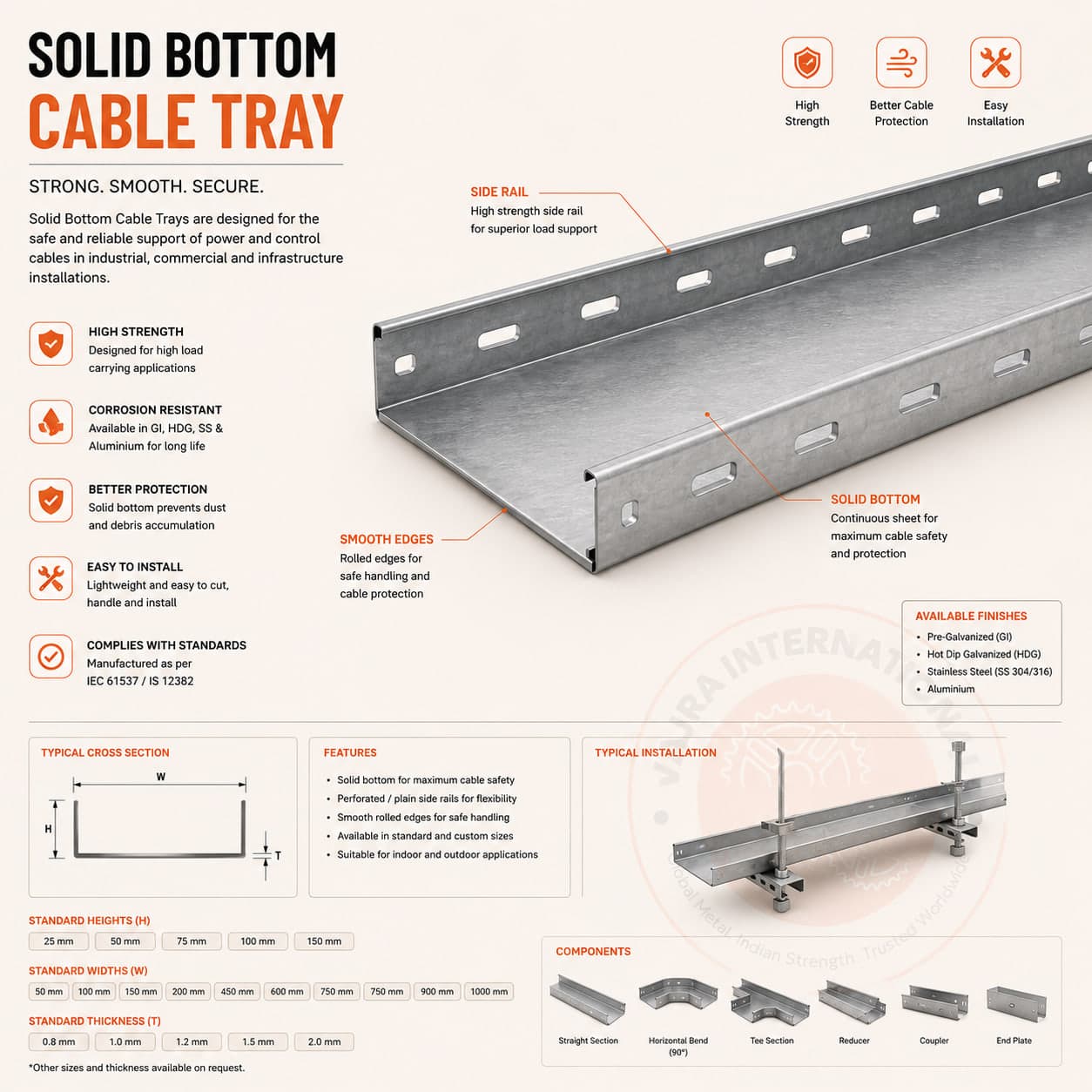
FRP vs GI vs Stainless Cable Trays: Choosing for Corrosive and Coastal Plants
Galvanized tray is the right answer almost everywhere, until you take it into salt air or acid fume and the zinc strips in months. How to choose between HDG, stainless and FRP when chemistry is the enemy.
Earthing Material Manufacturers India: How to Qualify a Supplier Before You Place the Order
India has hundreds of earthing material manufacturers. Most ship GI plates. A handful can demonstrate IS 3043 and IEC 62561 compliance with actual test records. Here is how to tell which is which.
Cable Tray Exporter India: Six Checks That Tell You If You're Buying from a Real Manufacturer
Hundreds of Indian companies export cable trays. Maybe a dozen are direct manufacturers. Here is how to verify which you are dealing with, before the container is sealed.
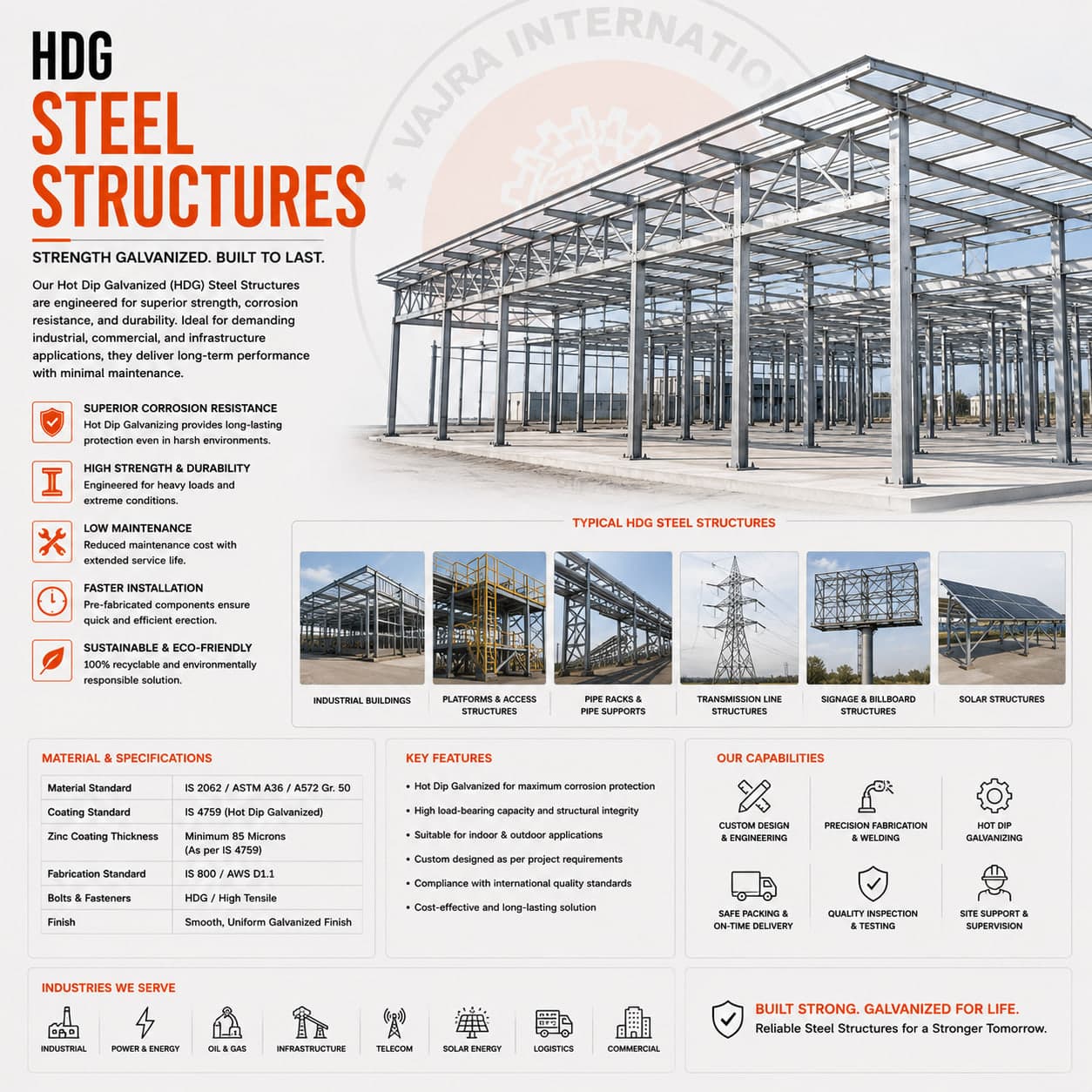
Third-Party Inspection for Steel Exports: How SGS, BV and Intertek Stages Actually Work
A TPI clause reads like a threat to first-time exporters. It is the opposite. Set up properly it protects the supplier too, because once the inspector signs, the quality argument is over and the goods ship.
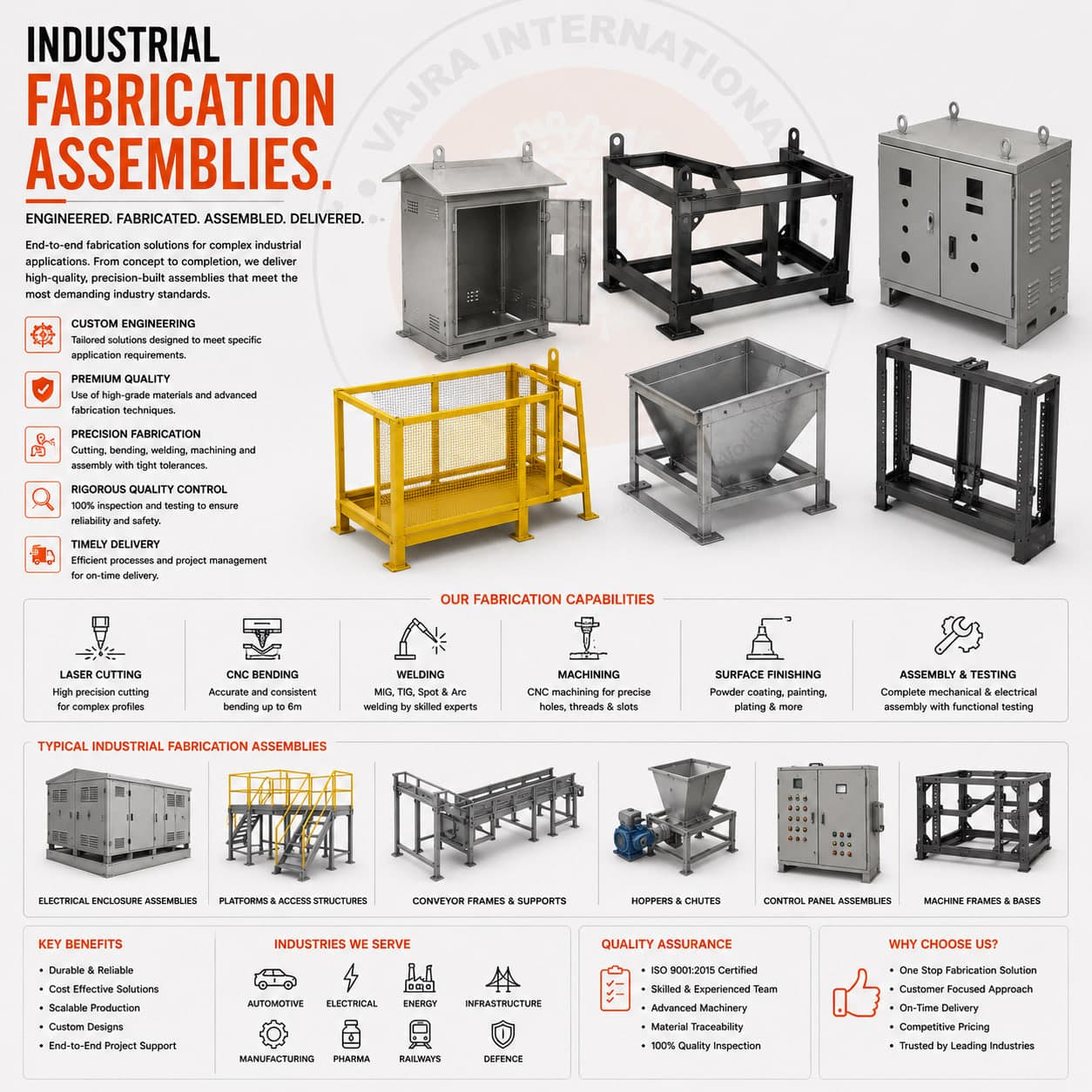
Export Packing for Steel: Anti-Corrosion, Crating and Loading a Container That Arrives Clean
Steel can survive a six-week voyage in perfect condition or arrive a rusty, dented mess, and the difference is almost entirely the packing. Beating container sweat, salt and rough handling, in order.
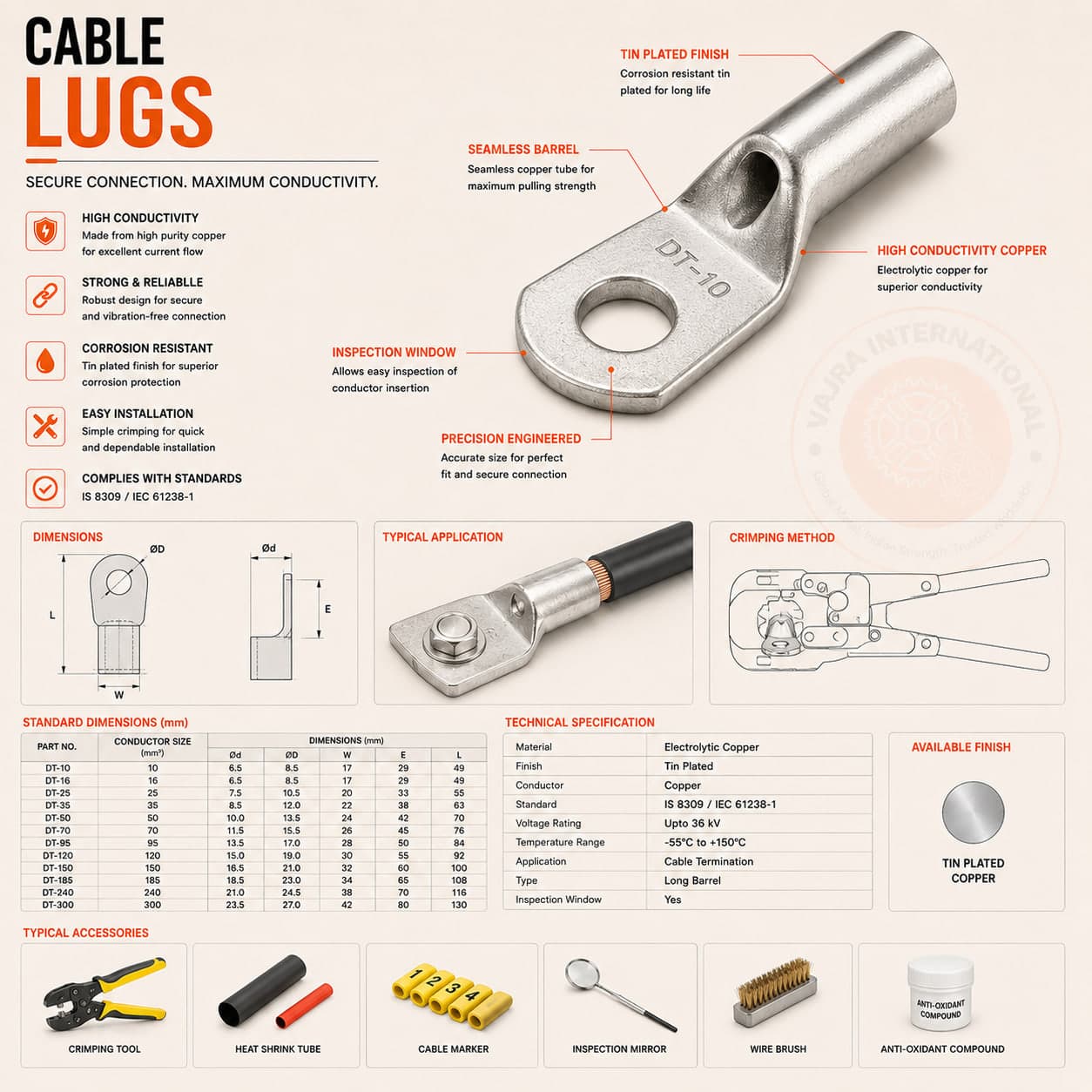
Cable Tray Earthing and Bonding: Jumpers, Lugs, Testing
A steel tray is only a reliable earth path when every joint carries a bonding jumper, the run ties back through sized lugs, and continuity is tested.
Copper Busbar Manufacturer India: What Switchgear and Substation Buyers Need to Check
Copper busbars look like a commodity until the wrong conductivity or temper causes a joint failure in a live switchroom. Here is what to verify before ordering from any Indian manufacturer.
Solar Mounting Structure Manufacturer India: Ground Mount vs Rooftop and What EPCs Need to Specify
India exports solar mounting structures to the UAE, GCC, Africa and Southeast Asia. Most arrive on site without a material test certificate or wind load calculation. Here is what to require from any supplier.
IS 2062 Structural Steel for Export: What Every Overseas Buyer Needs to Verify Before Shipment
IS 2062 has eight grades and multiple sub-grades (and most suppliers quote only the grade, not the sub-grade. Here's what overseas buyers should be asking for, and why the sub-grade matters more than the headline number.
Export Documentation for Steel and Electrical Goods: What Actually Travels with Every Shipment
A commercial invoice and packing list are not enough. Here is what a complete documentation set looks like for steel, cable tray and earthing goods, and which documents cause the most port delays.
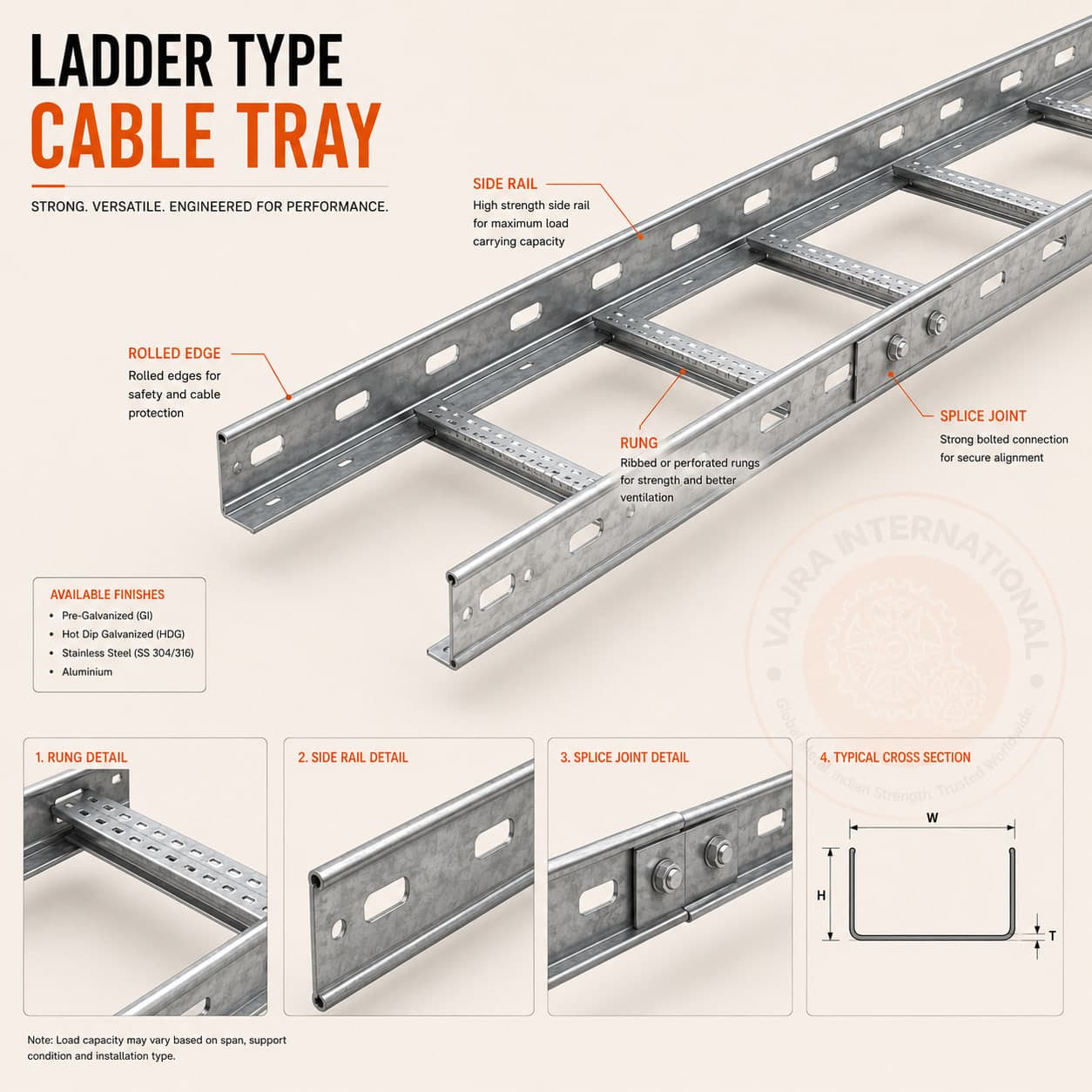
GI vs Stainless Steel Cable Trays for Offshore and Marine Environments: Making the Right Call
HDG cable trays last decades in an inland factory. On an offshore platform or a coastal chemical plant, the same tray can corrode through in under five years. Here's how to choose between GI, SS 304 and SS 316L for corrosive environments.
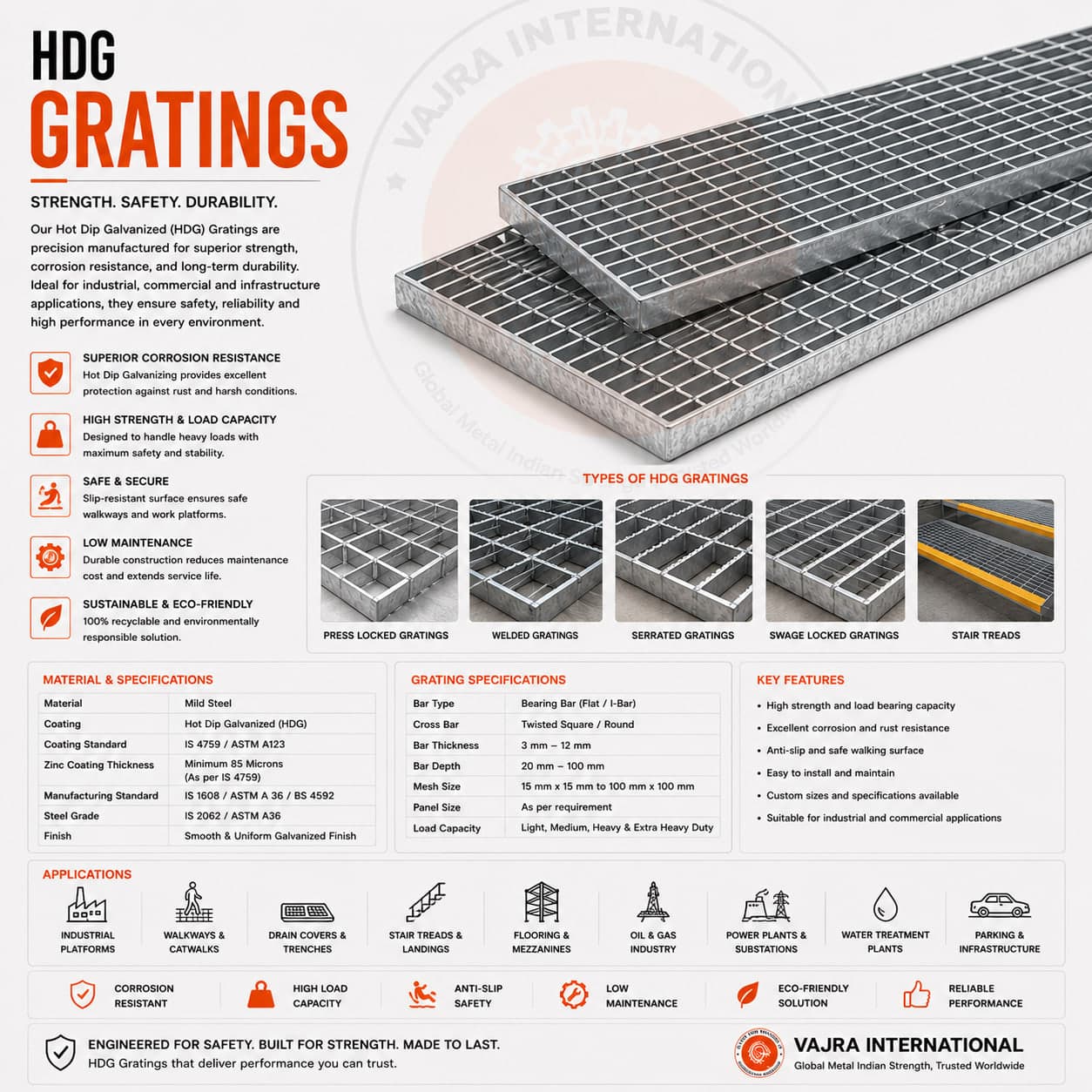
Floor Gratings for Oil Refineries and Chemical Plants: IS 5512, BS 4592 and What Engineers Specify
A grating failure on a refinery walkway is a different incident from one on a warehouse mezzanine. Here's what to specify for load capacity, mesh opening, surface type and coating when gratings go into a refinery or chemical plant.
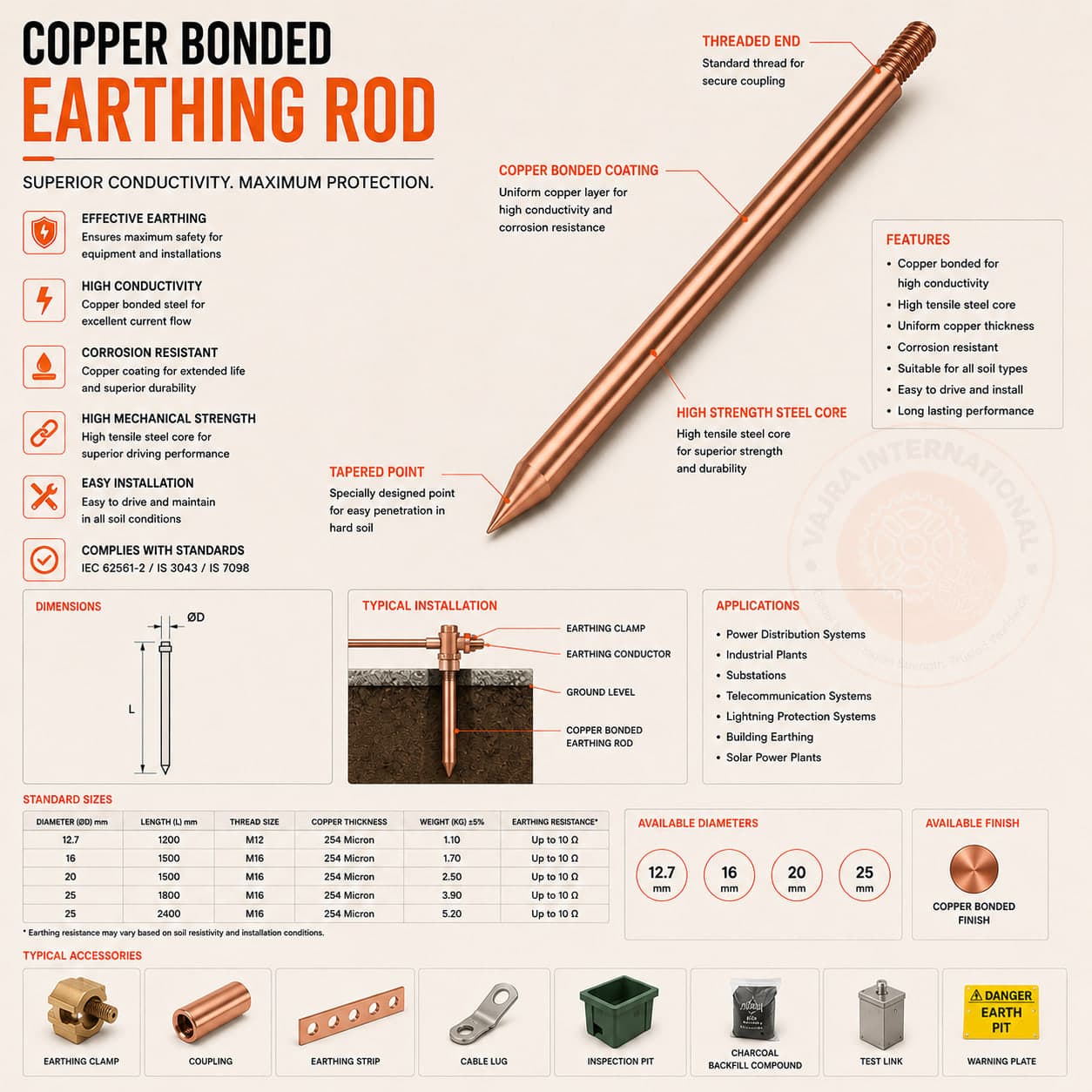
Copper Bonded Rods vs Solid Copper vs GI Earth Rods: Which to Specify and When
Three types of earthing rods, three very different cost and performance profiles. An electrical engineer at a data centre asked us why his copper bonded rods were showing high resistance after five years. The answer was in the soil chemistry, not the product.
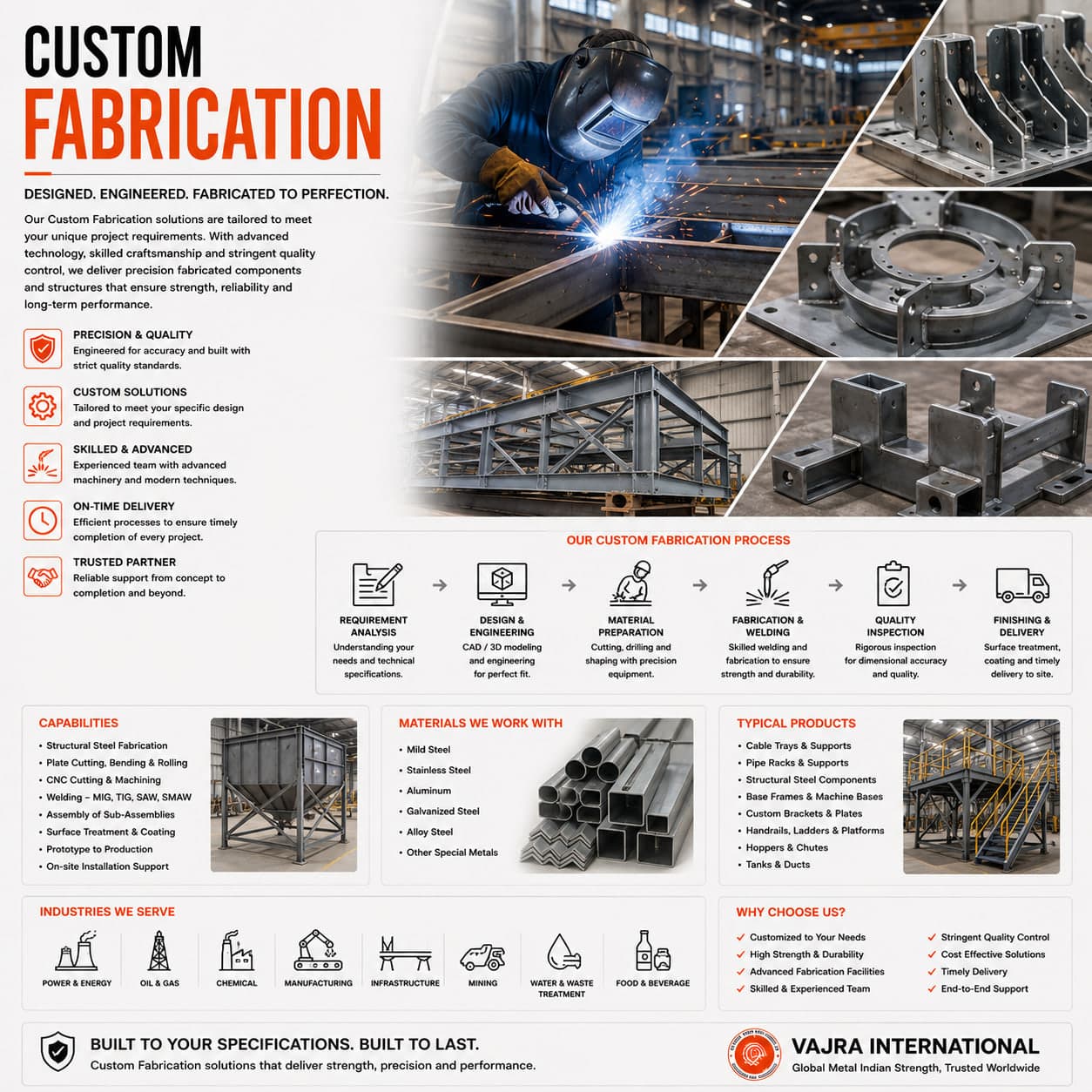
Defence Procurement in India: DPP 2020, IDDM Classification and DGQA Process for Steel Component Manufacturers
Defence orders are open to MSME manufacturers of cable trays, earthing systems, gratings and structural steel, but the procurement route is specific and the qualification takes longer than a commercial order. Here's what a manufacturer needs to know before approaching DRDO, Ordnance factories, or a Tier-1 defence OEM.
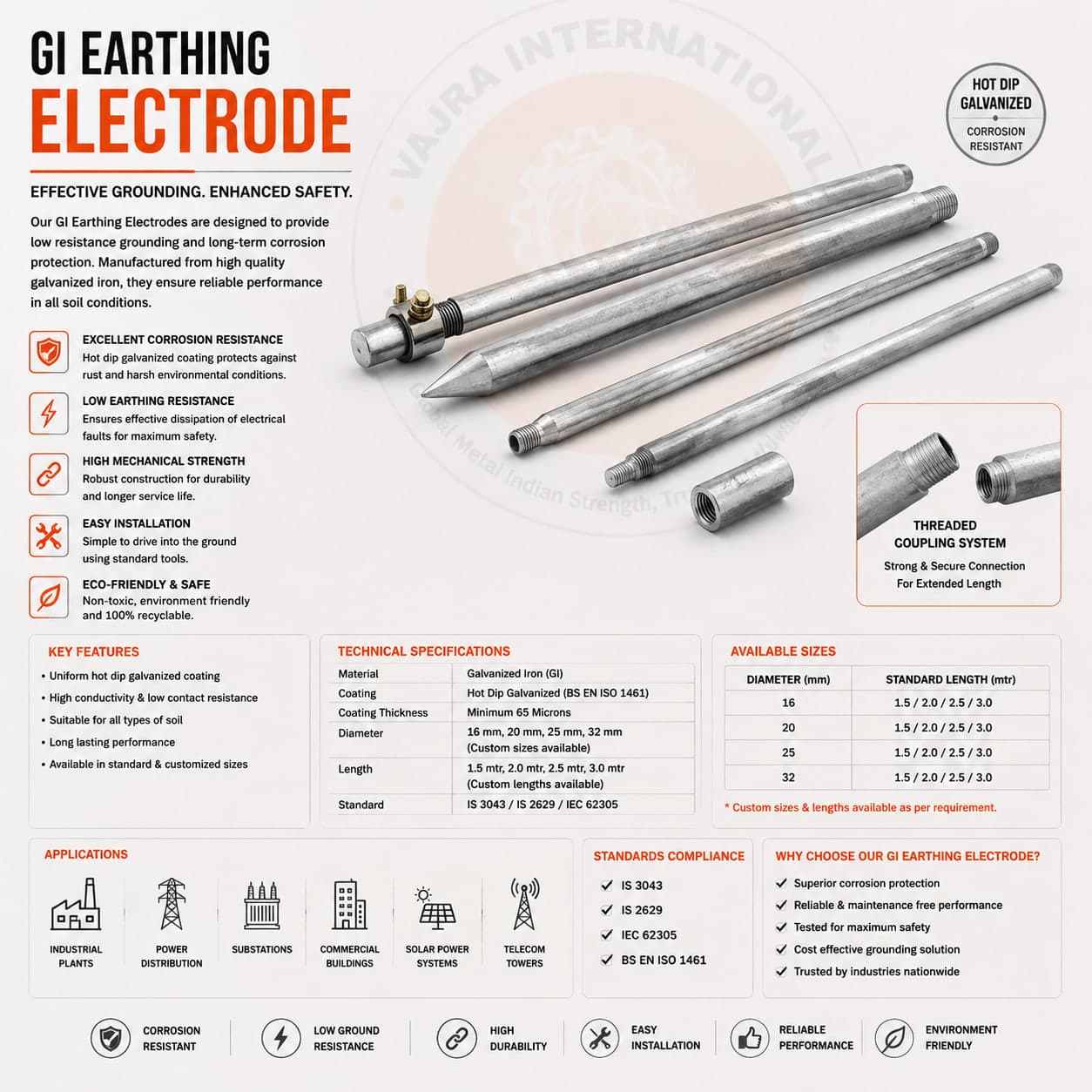
Earthing Plate, Pipe or Driven Rod: How IS 3043 Clause 4 Decides for You
Three electrode types, three soil conditions, three wrong assumptions. IS 3043 Clause 4 is specific, if you read it, the choice is almost mechanical.
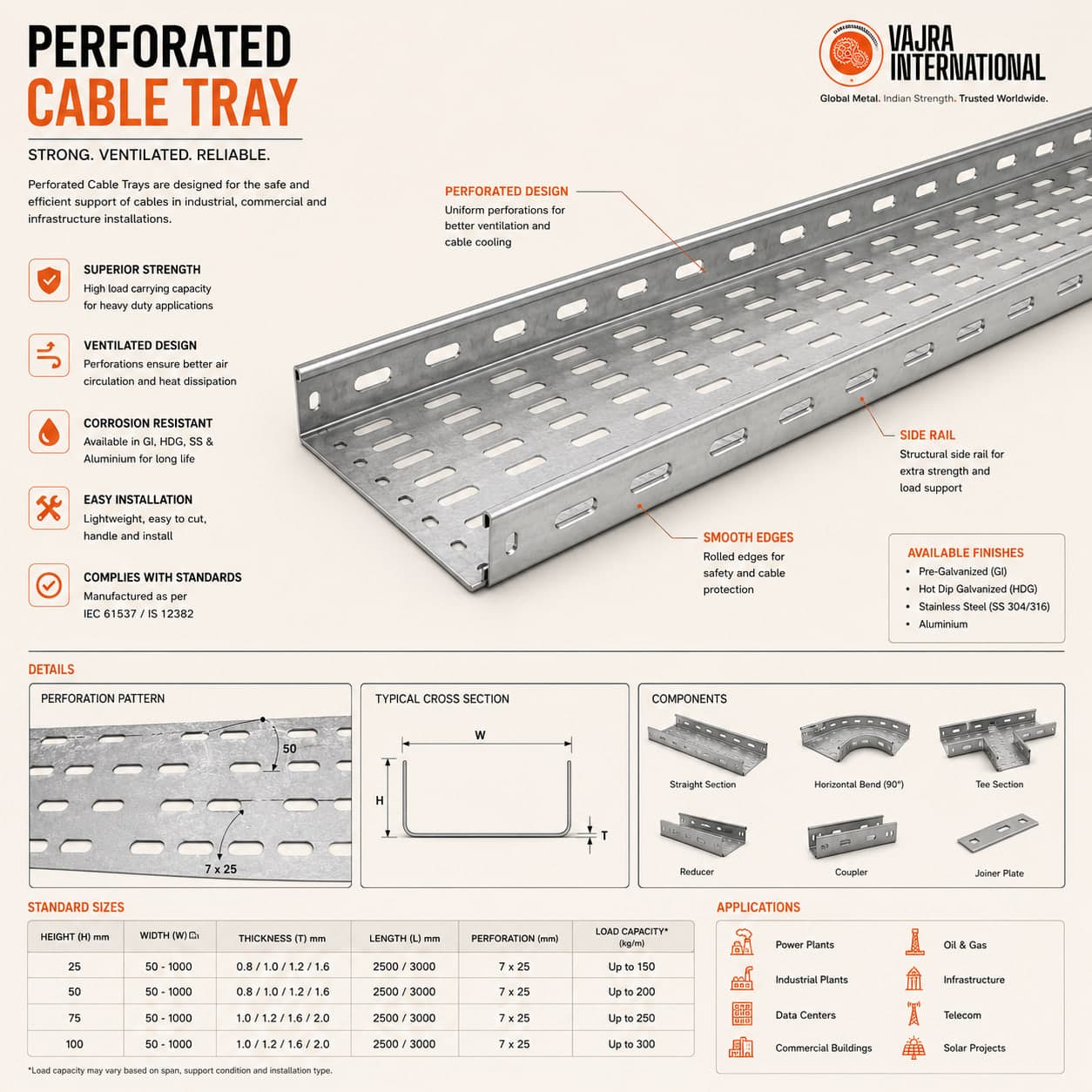
Cable Tray for Indian Data Centres: IEC 61537 Load Classes, HDG Finish and Seismic Bracing
The fastest-growing cable tray market in India is data centres, and they need a fundamentally different specification than industrial plant. Load class, finish, segregation, seismic bracing and TIA-942 compliance all in one guide.
Lightning Protection System Design: IS 2309, Risk Zones and the Air Terminal vs Down-Conductor Sizing Guide
IS 2309 divides structures into three risk zones and sets the conductor and component requirements for each. Here is how to read the standard, select components, and write a specification that passes inspection.
Cable Trays & Earthing for Kenya: KETRACO, KenGen & Nairobi Construction Procurement from India
Kenya's national grid expansion under KETRACO and KenGen's geothermal build-out are the two largest infrastructure procurement channels. What Kenya Power and EPC contractors require, and how an Indian manufacturer ships to Mombasa Port.
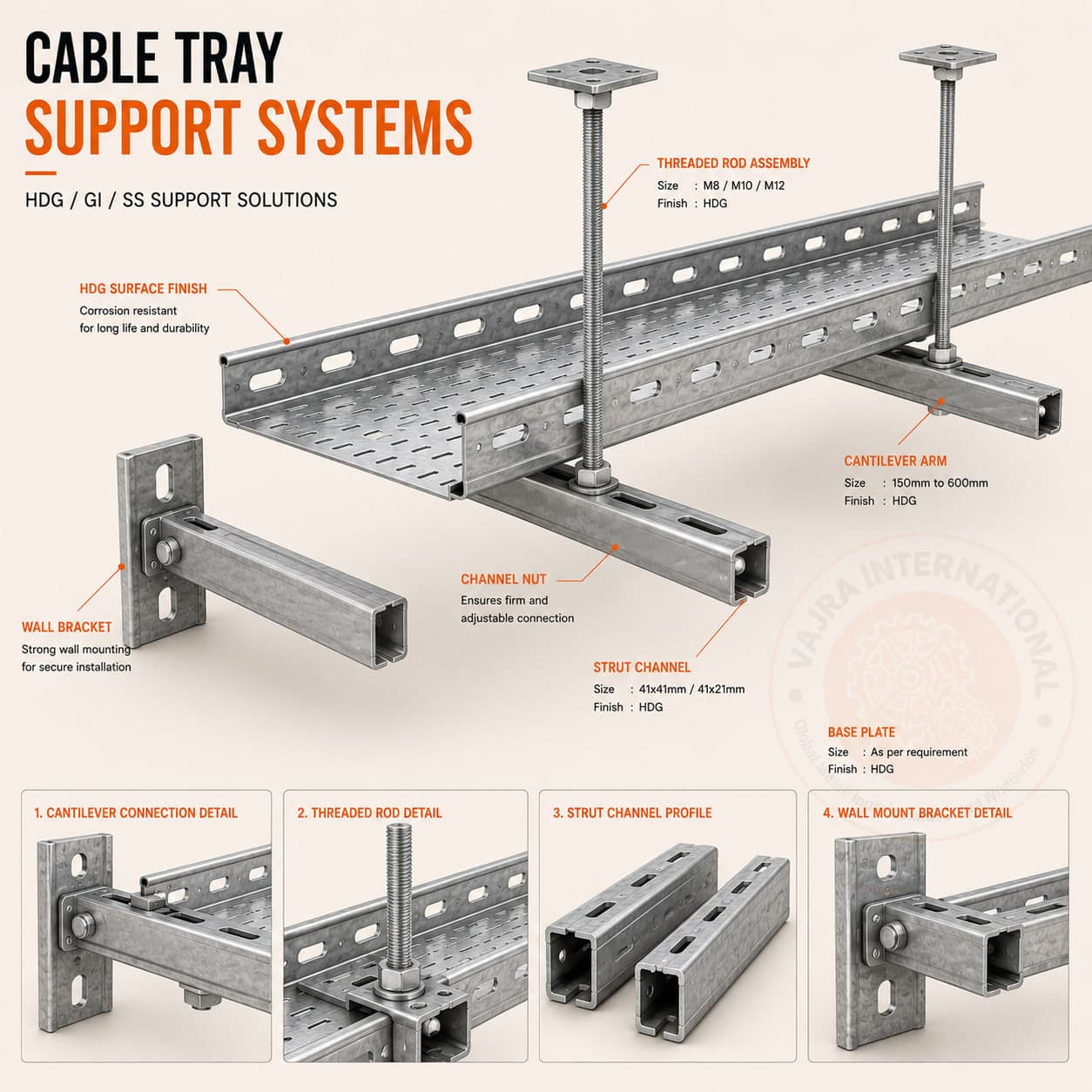
Cable Trays & Earthing for Bangladesh: BPDB, PGCB & Factory Procurement from India
Bangladesh's power sector expansion and garment factory construction create steady demand for Indian cable trays and earthing. What BPDB and PGCB procurement requires, and how to ship through Chittagong Port under zero-duty SAFTA.
How to Audit a Cable Tray Installation Against IEC 61537
A step-by-step field audit checklist for IEC 61537 cable tray compliance, covering load class verification, coating thickness, fill ratio, support spacing and electrical continuity.
Cable Trays & Earthing for Germany: EN Standards, DIN VDE Compliance & Hamburg Port Procurement from India
Germany imports precision industrial components from India but expects EN-standard documentation. What a German buyer or EPC requires from an Indian cable tray supplier. DIN VDE earthing, CE marking, and DGUV certification context.
Copper Busbar Size & Current Rating Table: Ampacity Guide to IEC 60439
A copper busbar rated for 1,600 A on paper may only carry 1,100 A in a 45°C switchroom. How to read IEC 60439 ampacity tables, apply ambient and stacking de-rating, and select the right size for your switchgear or distribution system.
Cable Trays & Earthing for the USA: NEMA VE 1, NEC, UL 467 & the Buy America Question. Procurement from India
Before importing cable trays or grounding from India, a US buyer has to clear two gates that don't exist elsewhere: Buy America eligibility and UL/NEMA conformity. Here is how to get both right.
Aluminium vs Steel Cable Trays: When to Specify Each
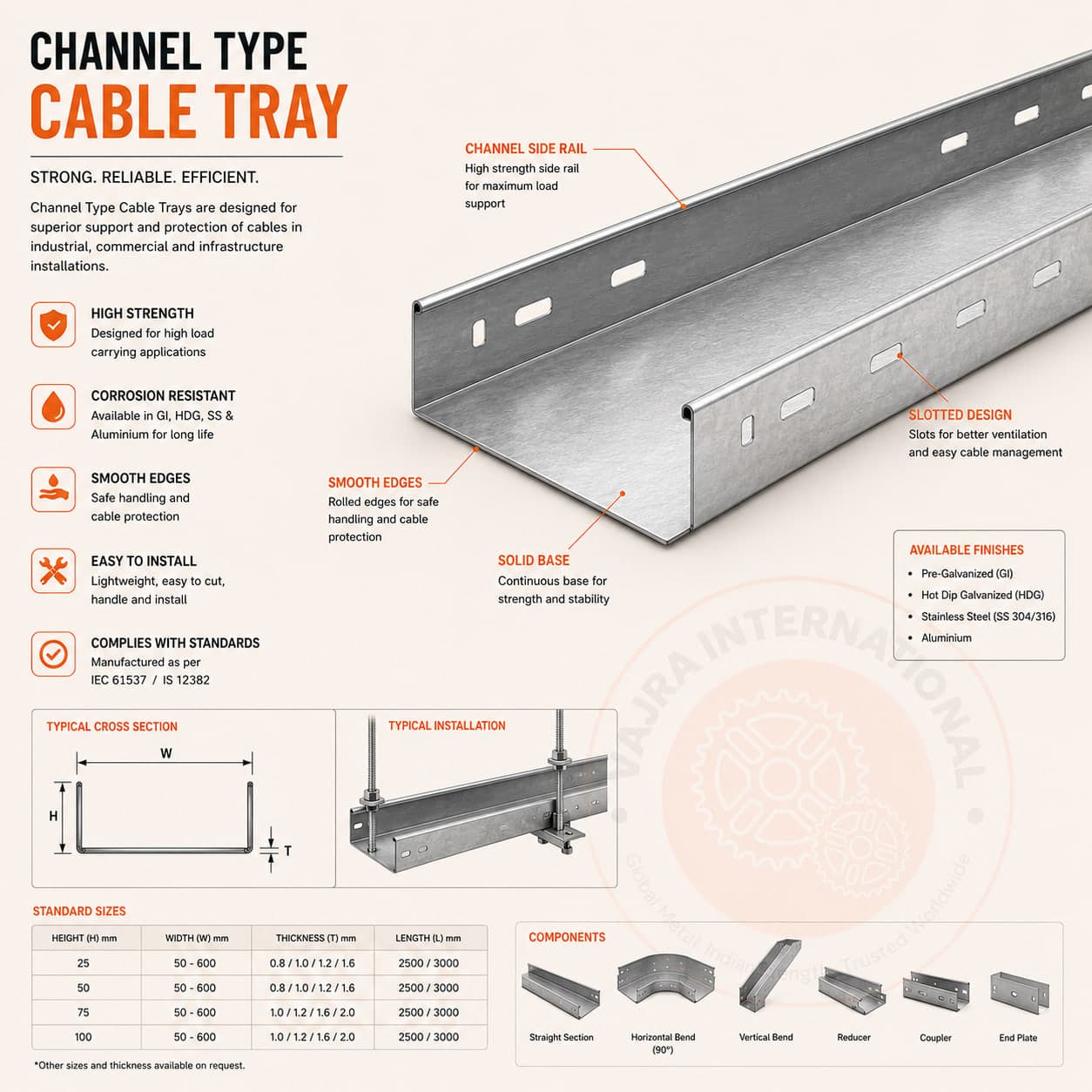
Aluminium cable trays cost 40–60% more per metre but weigh 70% less. The three conditions where the weight premium pays off, and the six where it doesn't.
Cable Trays & Earthing for the Philippines: MERALCO, VECO & EPC Procurement
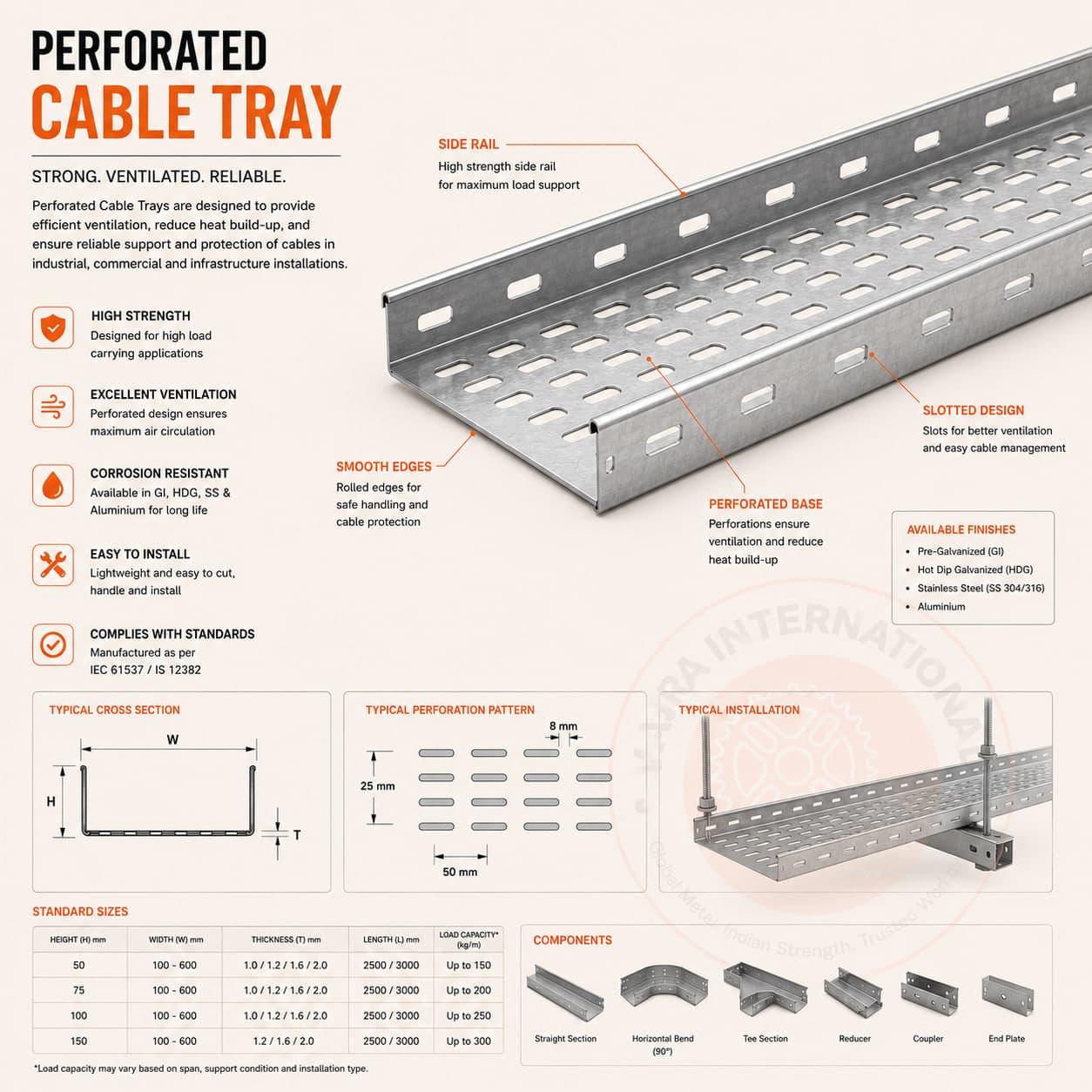
The Philippines is a top-10 importer of Indian cable management. What MERALCO-approved suppliers must meet, and how to document a shipment into Manila or Cebu.
Cable Trays from India to UK: BS EN 61537 Compliance & Procurement Guide
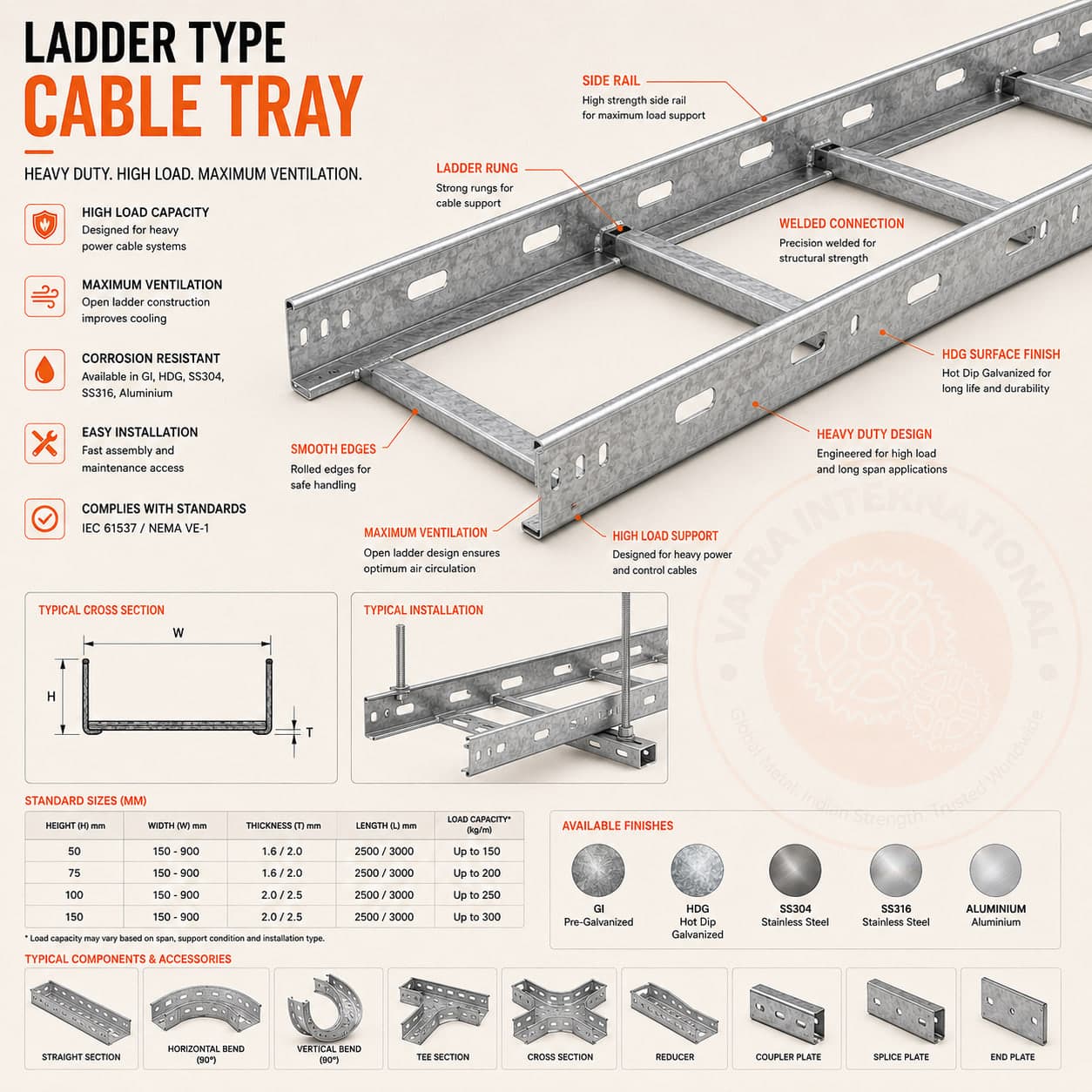
The UK levies 0% import duty on cable trays under the UK Global Tariff. What BS EN 61537 and UKCA marking require, and how to qualify an Indian manufacturer for UK projects.
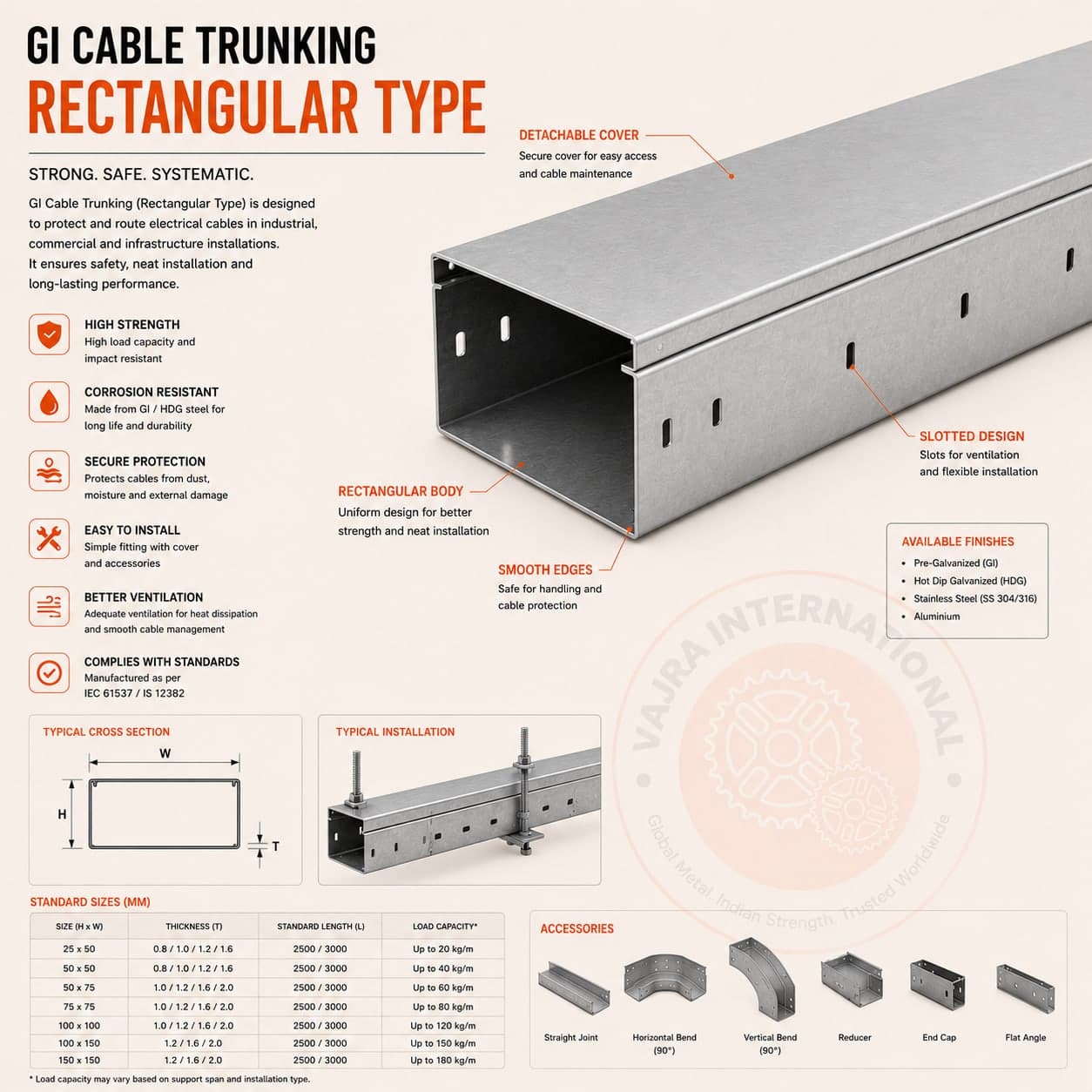
Cable Trays & Earthing for Saudi Arabia: ARAMCO, SABIC & SEC Procurement from India
Saudi Arabia is the largest single buyer of Indian cable management in the GCC. What vendor qualification, SASO certification and Saudi Aramco SAES require, and how to document a shipment into Dammam or Jeddah.
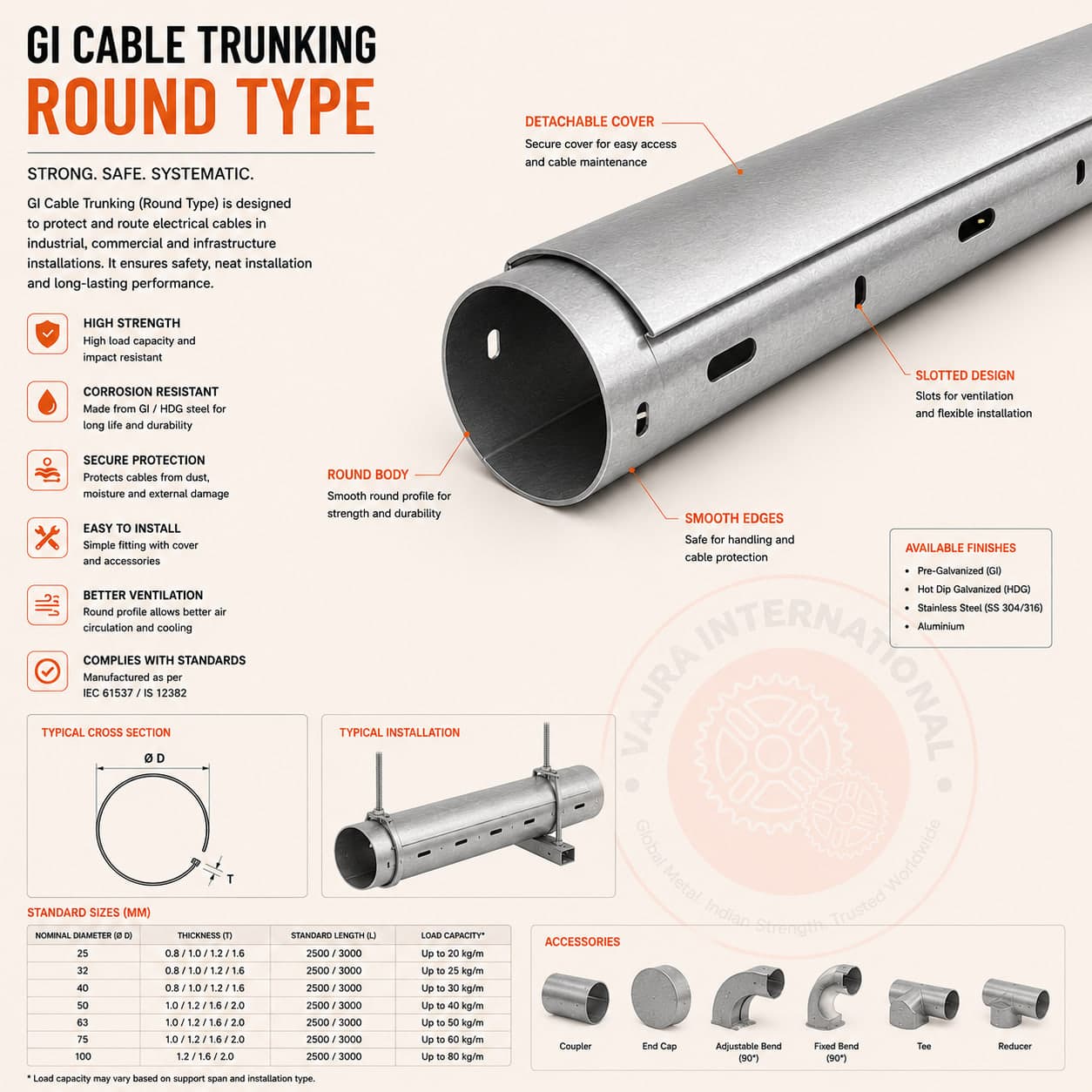
Cable Trays & Earthing from India to Australia: AS/NZS Standards, ECTA Duty & Mining Procurement
Australia levies 0% import duty on cable trays from India under the Australia–India ECTA. What AS/NZS Wiring Rules require, how to qualify an Indian supplier for mining, and the ports to use.
Substation Earthing System Design: IS 3043, Mesh Grid & Fault Current Sizing
A substation earthing system that passes the resistance test on day one can still produce lethal step and touch potentials under fault conditions. The IS 3043 design method, grid sizing, electrode selection and the tests that actually matter.
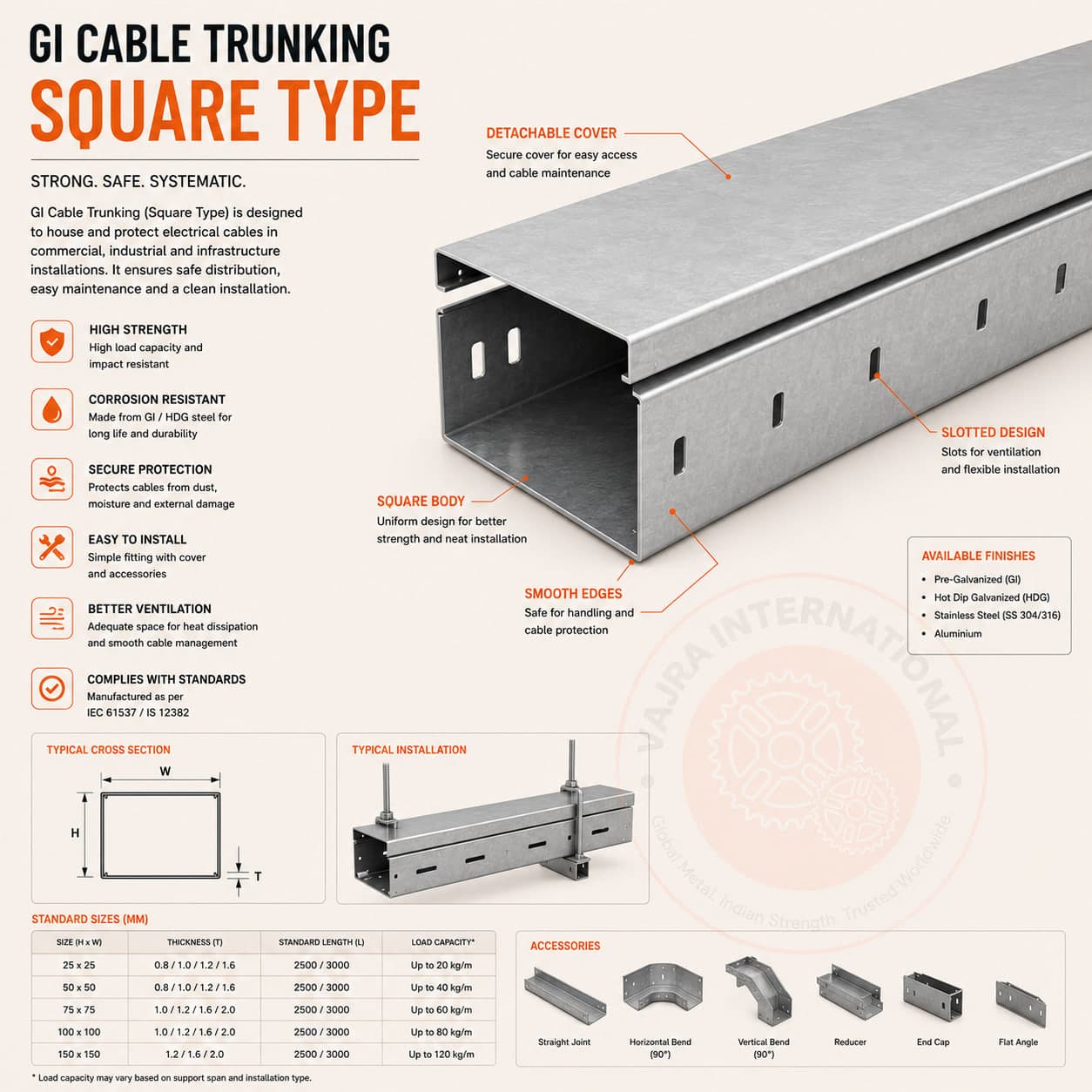
Cable Trays & Earthing for UAE: DEWA, ADNOC & EPC Procurement from India
The UAE is the largest single GCC market for Indian cable management. What DEWA and ADNOC specification teams require, how to claim India–UAE CEPA zero duty, and the port and documentation process.
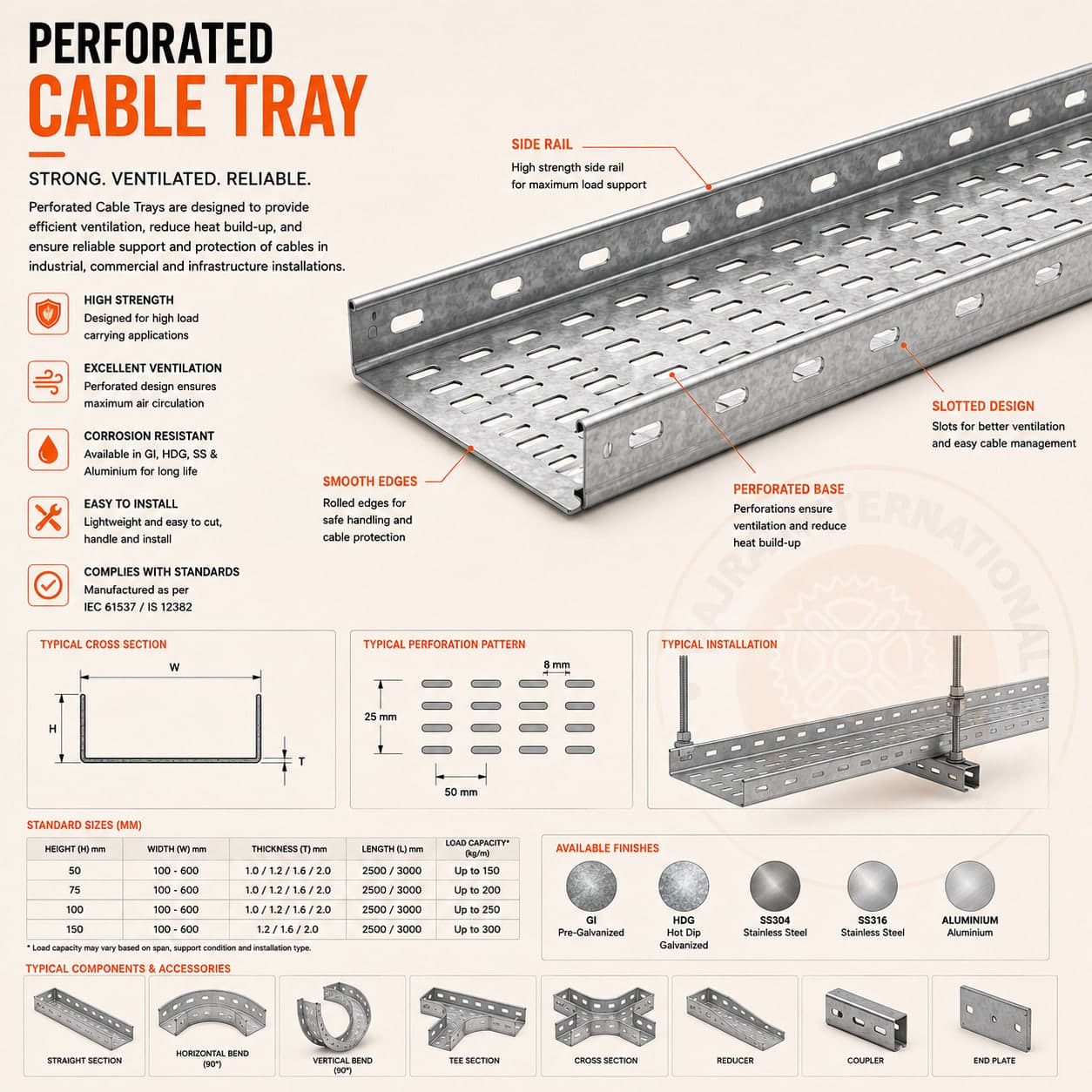
Cable Trays & Earthing for Nigeria: NNPC, Shell PIB & EPC Procurement from India
Nigeria imports USD 18 million of Indian cable management annually. What NMDPRA, NNPCL and Shell Petroleum Development Company require, and how to route a container shipment to Lagos or Port Harcourt.
Cable Trays & Earthing for Qatar: KAHRAMAA, QatarEnergy & EPC Procurement from India
Qatar's LNG expansion and national grid build-out make it a major importer of Indian cable management. What KAHRAMAA Transmission Standards and QatarEnergy GSPs require, and how to document a shipment to Hamad Port.
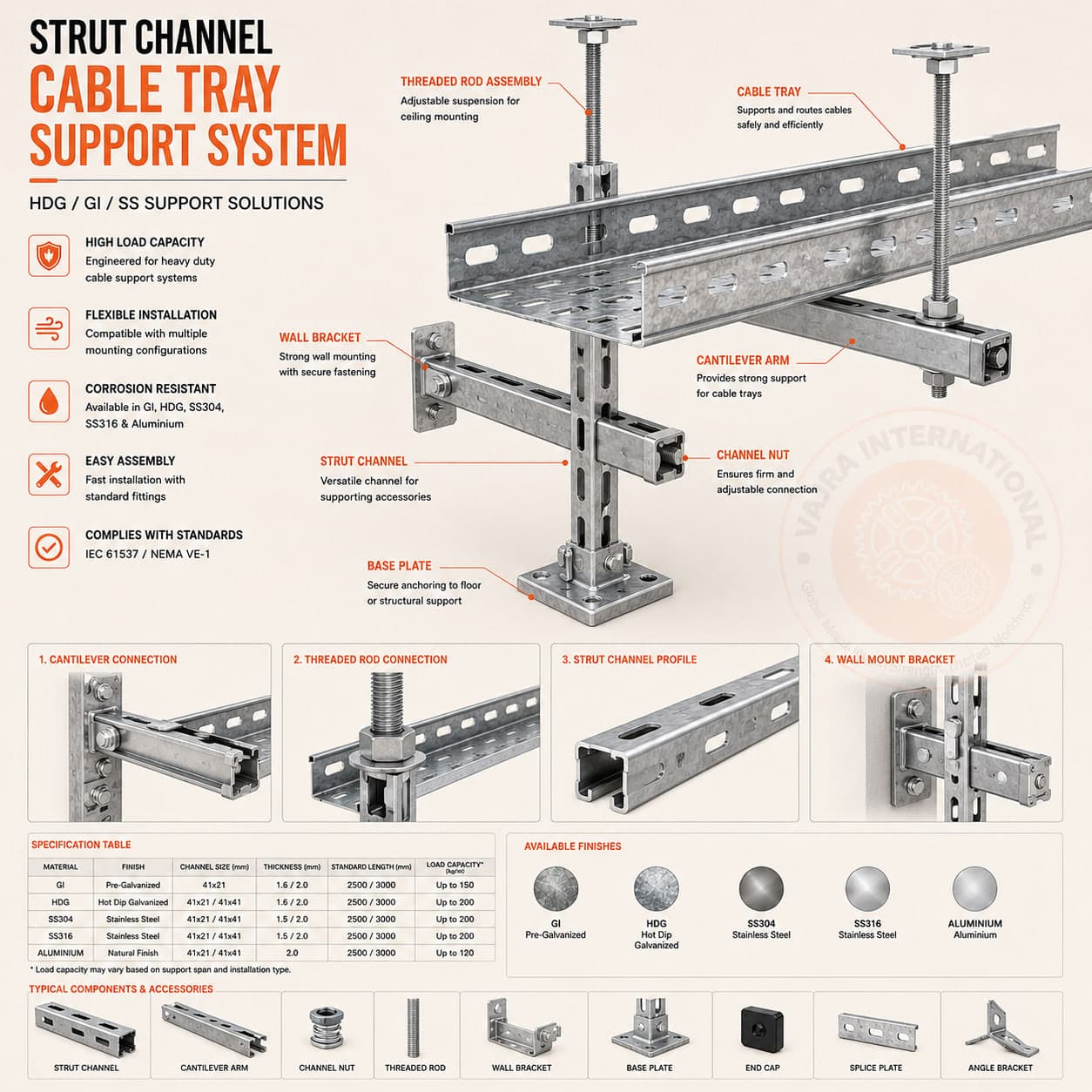
Cable Tray Support Spacing: Span Table Calculation & Installation Guide
Most cable tray installations fail at the support bracket, not the tray. How to read IEC 61537 span tables, calculate UDL for your cable schedule, and set maximum support spacing for each tray type and gauge.
India Metal Export HS Codes 2026: Cable Trays, Earthing & Busbars
The wrong HS code costs 5% in unnecessary import duty. Complete 2026 HS table for cable trays, earthing, busbars, gratings and solar structures from India.
India–UAE CEPA: Zero Duty on Cable Trays & Earthing. How to Claim
India–UAE CEPA removes 5% import duty on cable trays and earthing. The step-by-step process for claiming the Preferential COO zero-duty benefit.
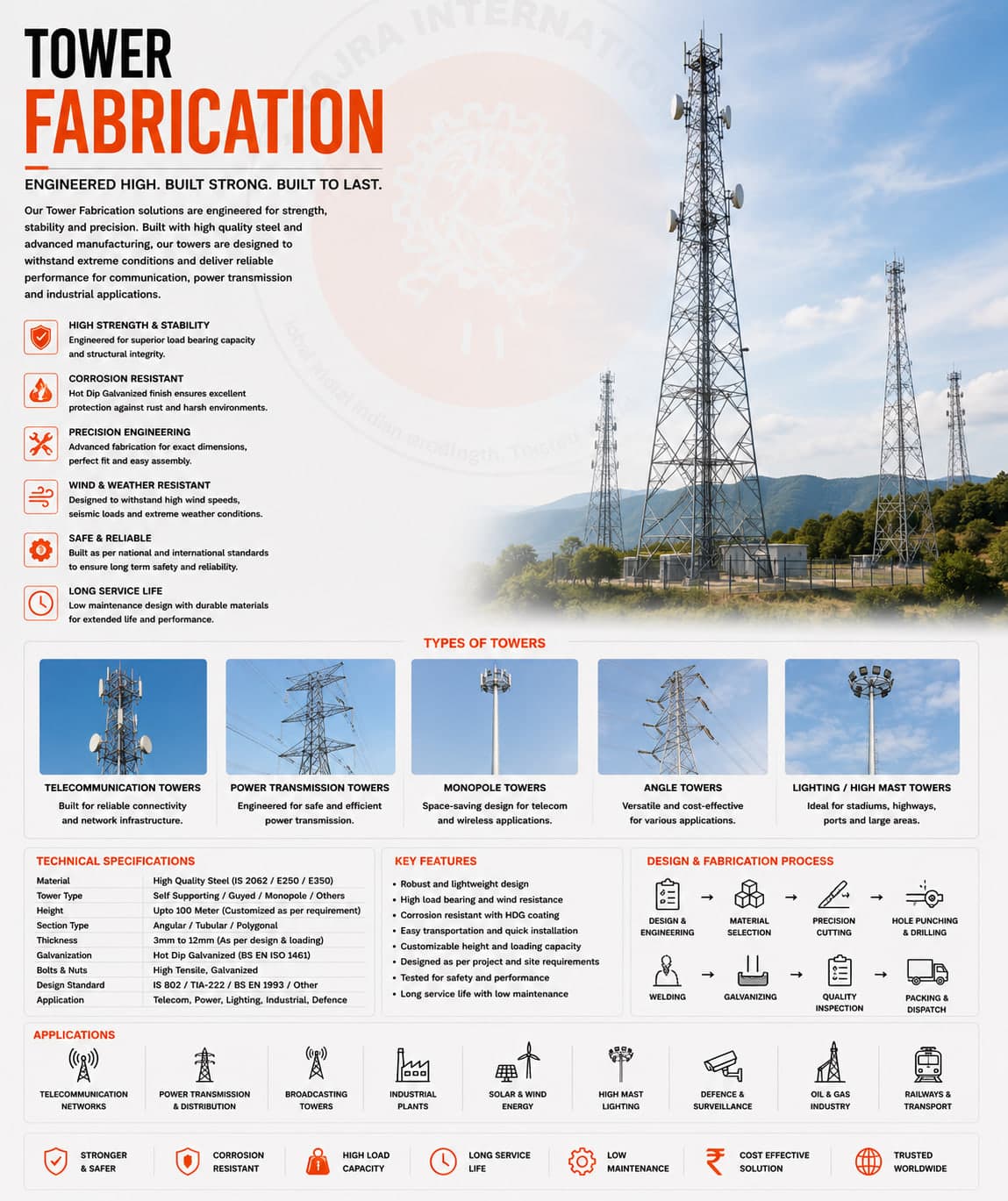
Total Landed Cost: Buying Metal from India to UAE, UK & Australia
Factory price is 30–45% of what you pay landed. The full cost breakdown with real numbers for UAE, UK and Australia routes, freight, duty and all.
How to Read a Material Test Certificate (MTC) from India
Most buyers check an MTC exists. Few verify it is valid. Line-by-line guide for reading an Indian MTC, and the three things that make one invalid.
Data Centre Cable Tray Specification: Fill Ratio & Hot-Aisle Guide
Data centre cable tray specs fail at fill ratio: Day 1 capacity calculated, future expansion forgotten. IEC 60364-5-52 and TIA-942 fill rules covered.
Oil & Gas Cable Trays: Zone 1/2, ARAMCO SAES-P-104 & Shell DEP
In Zone 1 areas an incorrectly earthed tray becomes an ignition source. ARAMCO SAES-P-104, Shell DEP and IEC 60079-14 requirements covered in full.
Lightning Protection IEC 62305: Risk Classification & Rolling Sphere
Most lightning protection RFQs arrive without a risk assessment. IEC 62305-3 classification, air terminal count and zone-of-protection calculation.
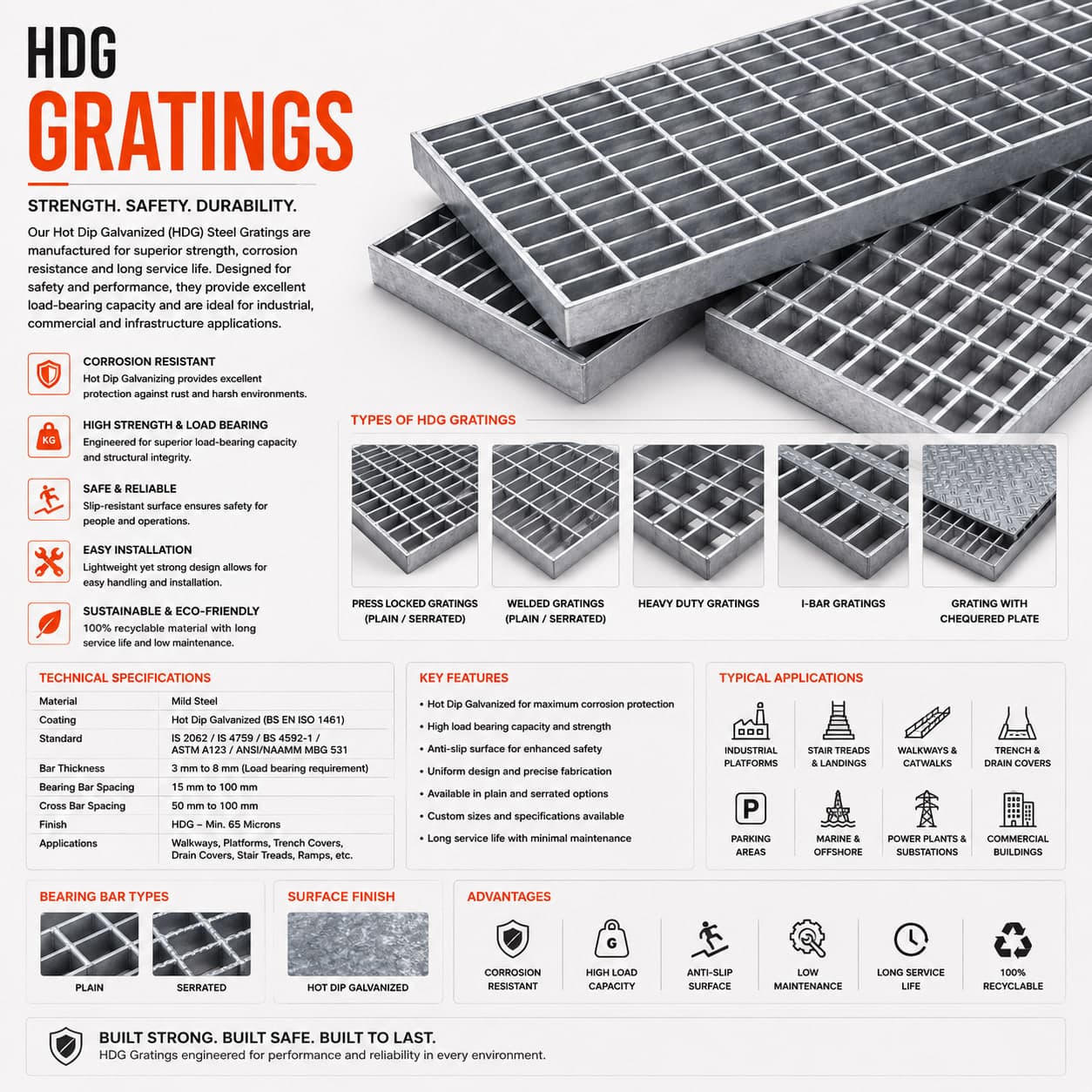
Electroforged Gratings for Australian Mining: BHP, Rio Tinto & FMG
Australian mining gratings require AS 1657, ASTM A123 Grade 85 minimum, heel-safe cross bar pitch and third-party coating inspection. What the spec says.
India vs China for Cable Trays: Honest Comparison on Quality & Docs
We make in India and are not neutral, but here is where China beats us on price, where India wins on documentation, and where the trap is.
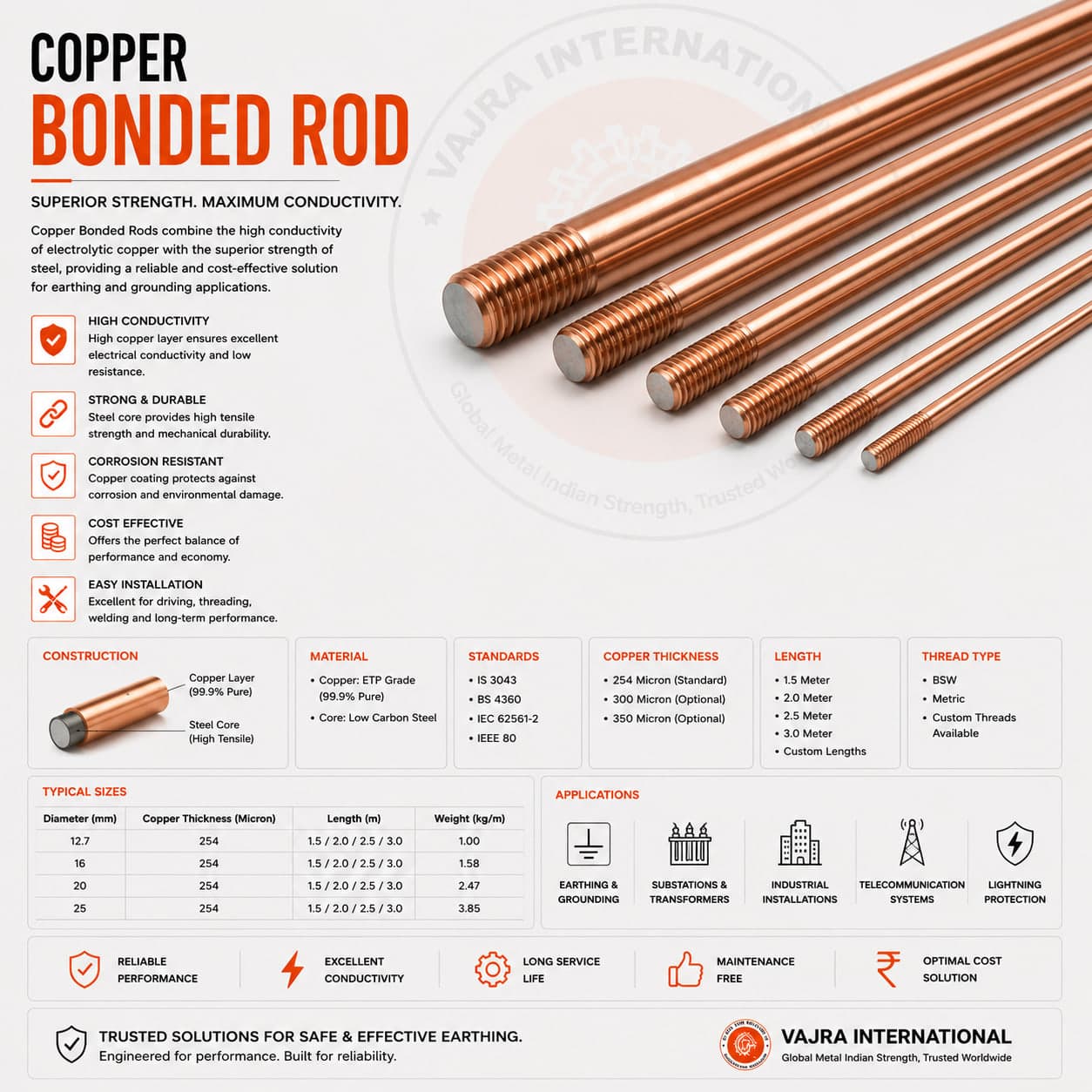
Solar Farm Earthing: DC Fault Paths, Architecture & IEC 62446
DC string earthing in a utility-scale solar farm is separate from AC system earthing. IEC 62446-1, IS 3043 and inverter earthing architecture, covered.
Cable Tray Load Capacity: How to Read Load Tables & Size Your Span
Sizing cable tray requires only the span, cable weight per metre and a growth margin, not a finished schedule. How to read a load table per IEC 61537.
Copper vs GI Earthing Electrodes: When to Specify Each | IS 3043
Copper earthing costs 8–12× more than GI for marginal benefit in most soils. The IS 3043 soil comparison and three conditions that justify the premium.
Cable Tray Manufacturers India: Specification & Qualification
Buyers qualifying Indian cable tray manufacturers ask the same eight questions. The complete specification and qualification guide, with the answers.
Earthing Electrode Manufacturers India: Copper-Bonded & GI Guide
Copper-bonded rods, GI pipes and earth plates differ more than most specs show. What to specify and what to verify before accepting any electrode shipment.
Structural Steel Fabrication from India: Qualification Guide
A mill certificate proves the steel. A qualification package proves the fabricator. Seven checks that cut Indian structural steel procurement risk by 80%.
Copper Busbar Specification: ETP Purity, MTC & Current Density
A 0.5% copper purity drop at 1,600 A causes a thermal fault within months. Grade verification, sizing calculations and the IS 1897 tolerance table.
Electroforged Grating Specification: Load Tables & Bar Size Guide
Most grating buyers over-specify the bearing bar by one size. How to read a load table and size grating for actual UDL, not worst-case theoretical load.
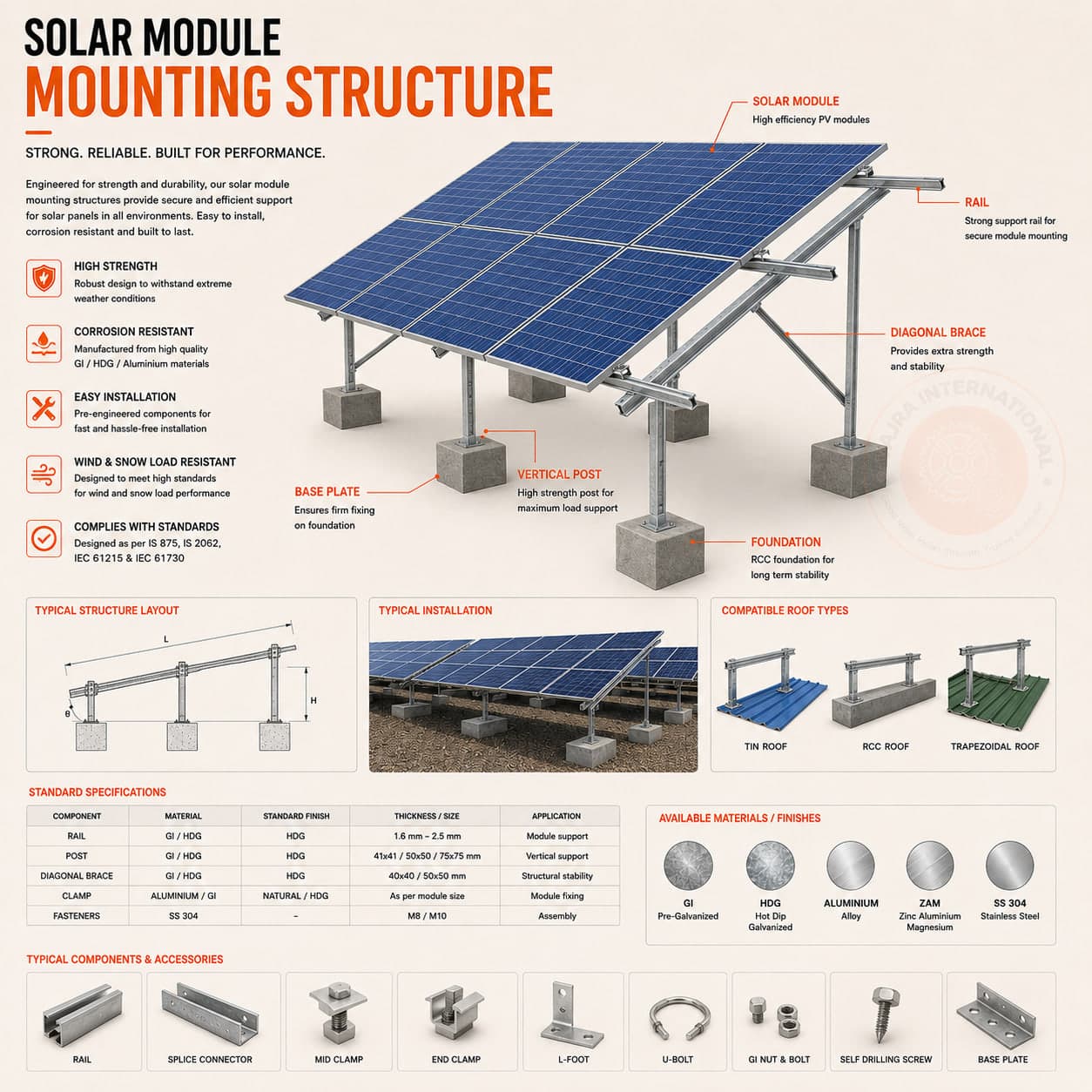
Solar Mounting Structures India: Specification & Site Rework Guide
Solar mounting errors are most expensive at specification stage. Wind-load, corrosion and pile-design decisions that prevent site rework, covered.
Cable Tray Specification Guide: Ladder vs Perforated vs Trunking
Most cable tray failures start at the bolt hole, tray type, gauge and the fabrication detail that separates 5-year trays from 25-year ones.
Hot-Dip vs Pre-Galvanized Steel: Lifecycle Cost & Coating Guide
Pre-galvanized saves 15% on day one and costs 300% more by year five outdoors. The actual zinc numbers and lifecycle calculation that settles the choice.
Indian Metal Export Documents: MTC, COO & HS Codes Explained
Getting the HS code wrong holds containers at port. Every document needed for an Indian metal export, and the specific errors that cause delays.
Earthing System Design: Why Most Failures Start at the Joint
73% of earthing failures are joint failures, not electrode failures. How to specify a system lasting 30 years, from soil measurement to joint selection.
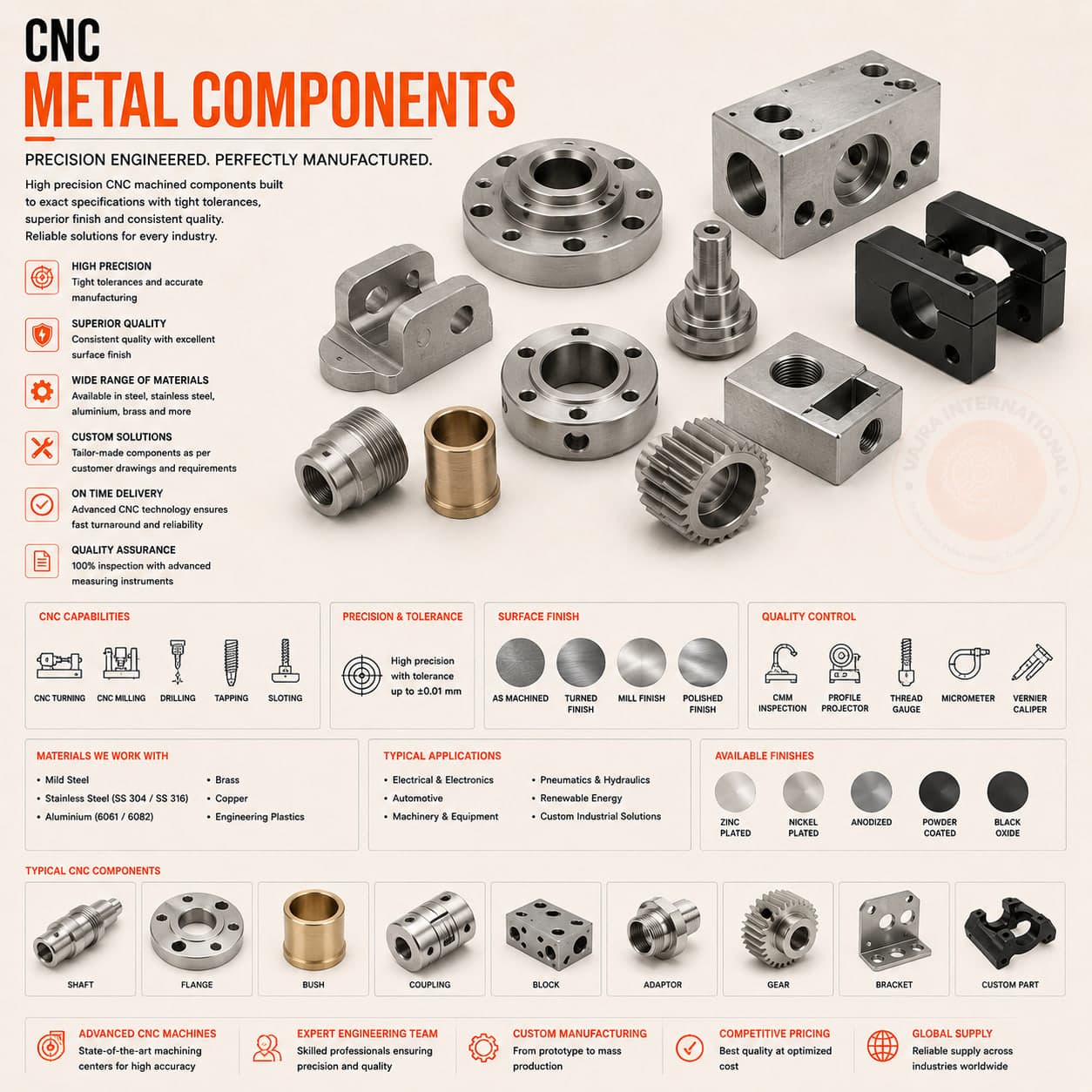
Defence Metal Traceability: Passing DPSU & MoD Supplier Audits
The barrier to defence supply is a document room proving what you made, from what material, checked by whom, not tight tolerances.
All content is written by Vajra International's engineering and trade documentation team, the same people who manage production under our ISO 9001:2015 certified QMS.
Put a spec in front of the people who make it.
Send drawings, a BOQ, or a simple description. You'll get a structured quotation covering specification, finish, lead time and Incoterms, from the manufacturer, not a middleman.
- MTC · COO · inspection reports
- ±0.01 mm precision · in-house QA
- FOB · CIF · CFR to all major ports