

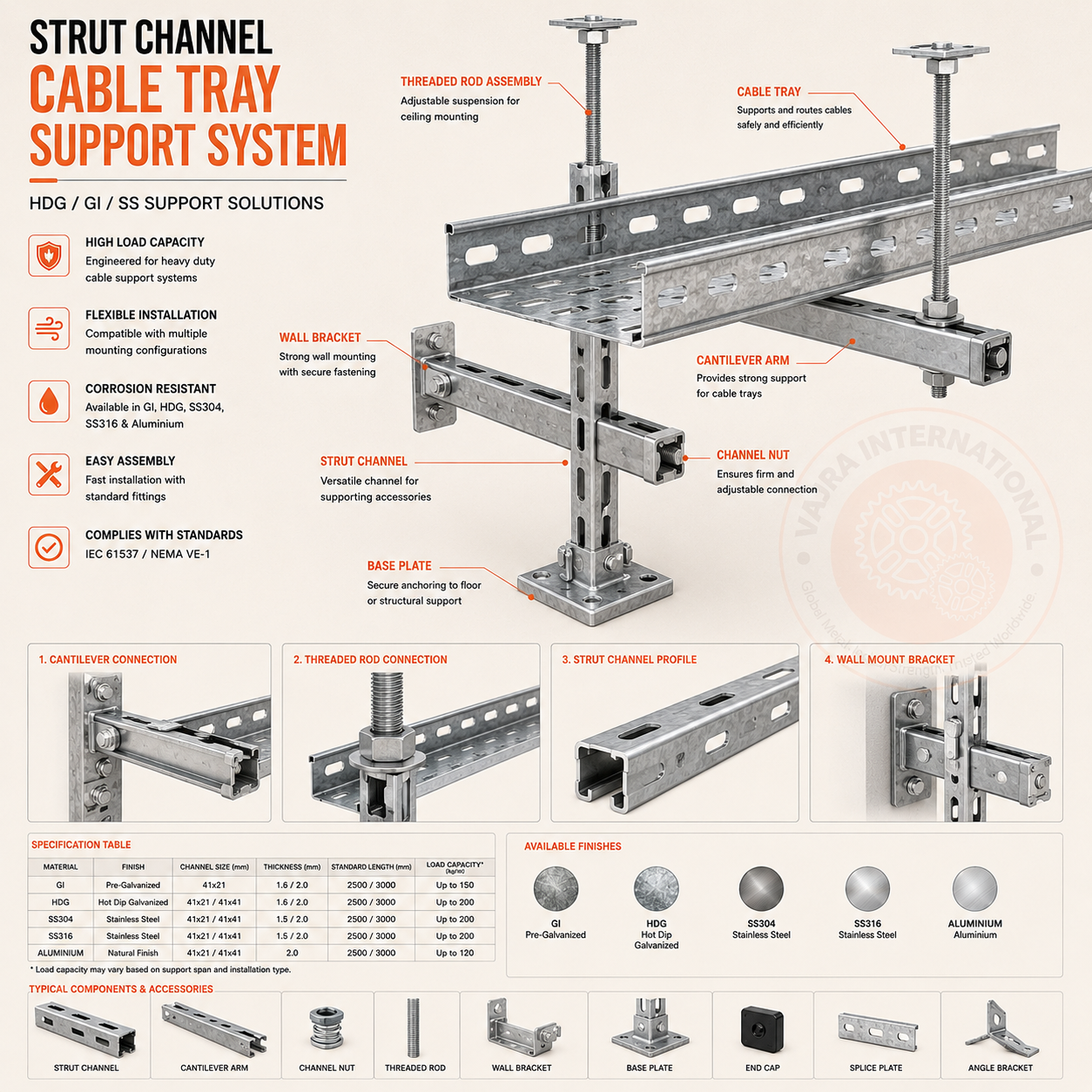
The most expensive mistake in data centre cable management is not specifying the wrong tray width on Day 1. It is specifying for Day 1 density and discovering you need a second installation pass with larger trays before the project is 30% live. A 600 mm wide tray specified for a 250-rack initial build becomes the bottleneck the moment the second phase adds 150 racks that were already in the design brief. The correct approach is to size for the full build-out density at the specification stage, which requires knowing how to read the fill ratio rules correctly, not just picking the width that looks comfortable on the first-pass drawing.
Fill ratio rules. IEC and TIA-942 differ, and the difference matters
IEC 60364-5-52 recommends a fill ratio of 40% for ladder trays carrying power cables and 60% for perforated trays carrying data and signal cabling. TIA-942-B (Telecommunications Infrastructure Standard for Data Centres) recommends 60% fill for pathway capacity planning. The practical difference: TIA-942 was written for telecoms copper and fibre cabling where thermal derating is not a concern; IEC fill ratios are correct for power cabling under full load. In a tray carrying both power and data cabling, apply the IEC 40% rule to the power cables and TIA-942 60% to the data runs, do not average them. Use separate trays for power and data wherever possible in Tier 3 and Tier 4 data centres: the earthing, containment and fire-zone requirements differ.
Raised-floor vs overhead trays, the specification differences
- Raised-floor (sub-floor) perforated trays: 50–100 mm depth. Lower fill ratio acceptable because airflow is not blocked by the tray, cooling passes through the perforations and floor tiles. Standard finish: HDG or powder coat over zinc. Common mistake: ordering a tray depth above 100 mm without checking floor void height at every entry point and penetration.
- Overhead ladder trays: 600–1200 mm wide, 75–150 mm deep, mounted from structural ceiling. Standard for power distribution and inter-rack runs in hot-aisle/cold-aisle architectures. Rung pitch: 250 mm standard; 150 mm for smaller cable bundles with tight bending radius requirements.
- Vertical risers: enclosed trunking with covers. Must be fire-stopped at every floor penetration with intumescent collars or foam to ETAG 026. Cable fill inside the riser must stay below 40%, restricted airflow increases thermal derating.
- Cable tray earthing and bonding: per IEC 62305-3 and TIA-607-C, all metallic cable management must be bonded to the facility earthing system. Each tray section must be electrically continuous. Main earthing connection at both ends of every run; intermediate earth points on runs exceeding 30 m.
Sizing for a 10-year build, the correct method
Step 1: compile cable counts for 100% build-out, not just Phase 1. Step 2: calculate required cross-section at the applicable fill ratio. Step 3: add 30% contingency to the calculated figure. Step 4: round up to the next standard tray width. Specifying a 600 mm tray for 580 mm of calculated cable cross-section with no contingency is the most common and expensive error. Standard cable tray widths: 50, 100, 150, 200, 300, 400, 500, 600, 800, 1000 mm. For most data hall overhead power runs, 600–1000 mm ladder trays are the working default; 300–600 mm perforated for data runs.
Fire rating requirements, what Tier 3 and Tier 4 data centres require
Fire performance requirements in data centres are primarily addressed through cable specification, not tray specification. LSZH (Low Smoke Zero Halogen) cables to IEC 60332-1 or BS 7211 do not require a fire-rated tray; the fire-rating is in the cable insulation. What IS required of the tray: non-combustible (steel or aluminium, not plastic), and fire-stopped at all wall and floor penetrations to ETAG 026 or NFPA 70A Cl. 300.22 (US). For GCC data centre projects under DEWA or Abu Dhabi Civil Defense codes: the MEP consultant will specify the fire-stop requirement per local authority, confirm this before ordering cable management accessories.
Complete RFQ checklist for a data centre cable tray package
- Tray type for each run: ladder (power), perforated (data/mixed), enclosed trunking (risers).
- Width × depth in mm for every run type.
- Material and finish: HDG (sub-floor, outdoor), powder-coated (visible overhead), SS 316L (wash-down, cooling).
- Standard: IEC 61537 / BS EN 61537 / project-specific authority standard.
- Linear metres per tray type, plus quantity of horizontal bends, vertical bends, tees and reducers.
- Accessories: coupler plates, splice plates, drop-out plates, earthing bonding conductors.
- Destination port, Incoterm and required documentation (MTC, COO, coating inspection report).
We supply data centre cable tray packages, full runs with bends, tees, risers and coupler sets, pre-matched to your cable schedule on request, with fill ratio calculations included as part of the quotation. RFQ response within 24 hours.
Submit your data centre cable schedule and we'll return a matched tray specification with IEC 61537 fill ratio calculations included in the quotation, at no cost, within 24 hours.