

Electrical Contractors
Cable trays, accessories, earthing, lugs and glands — the full electrical metal package for contractors.
What this sector needs
Electrical contractors source the complete containment and earthing package from Vajra: trays and accessories, earthing systems, lugs and glands — finish-matched and delivered to site schedules.
Product lines for this sector
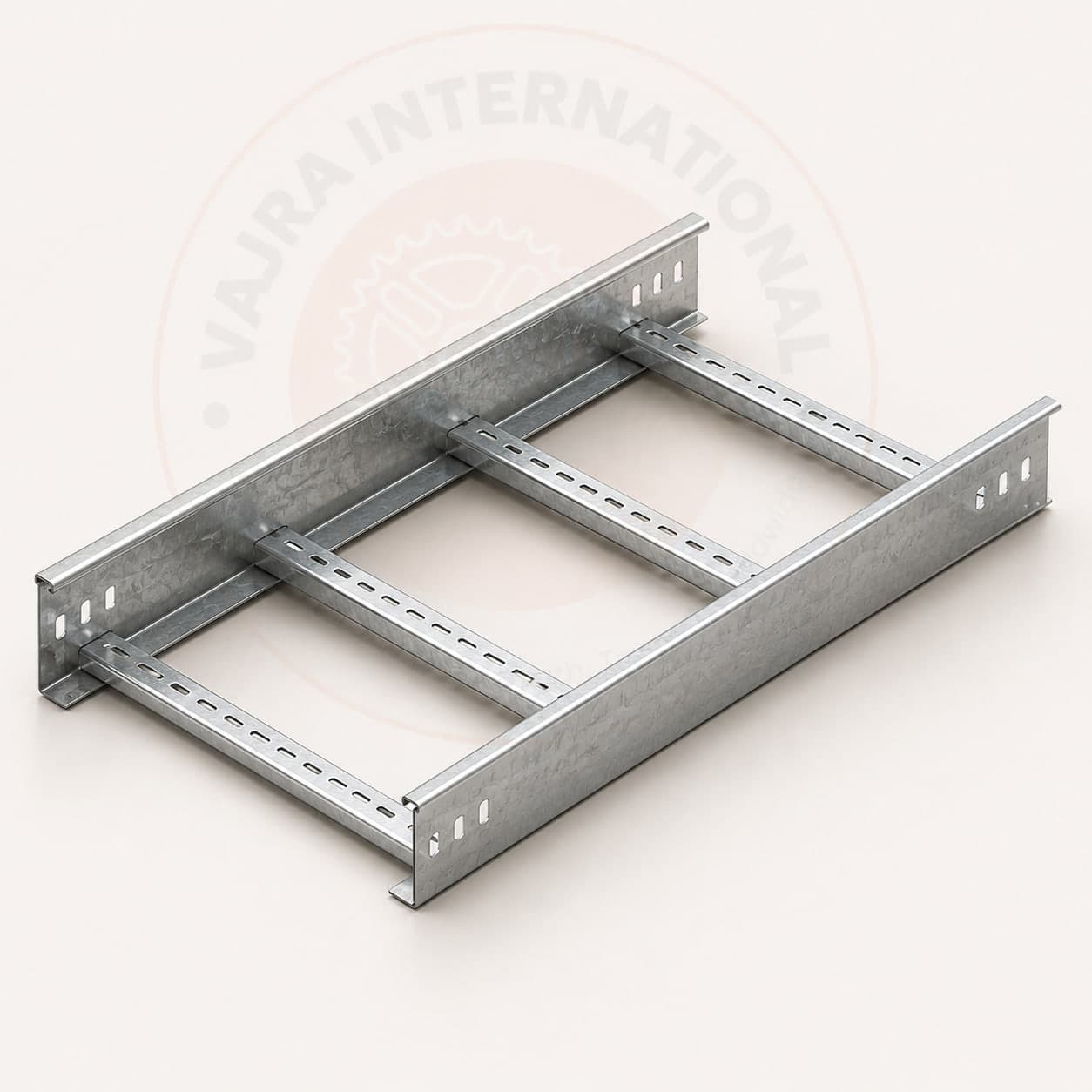
Cable Trays
Ladder, perforated, and raceway cable trays roll-formed in MS, GI, SS and aluminium, sized and finished to project load and environment.
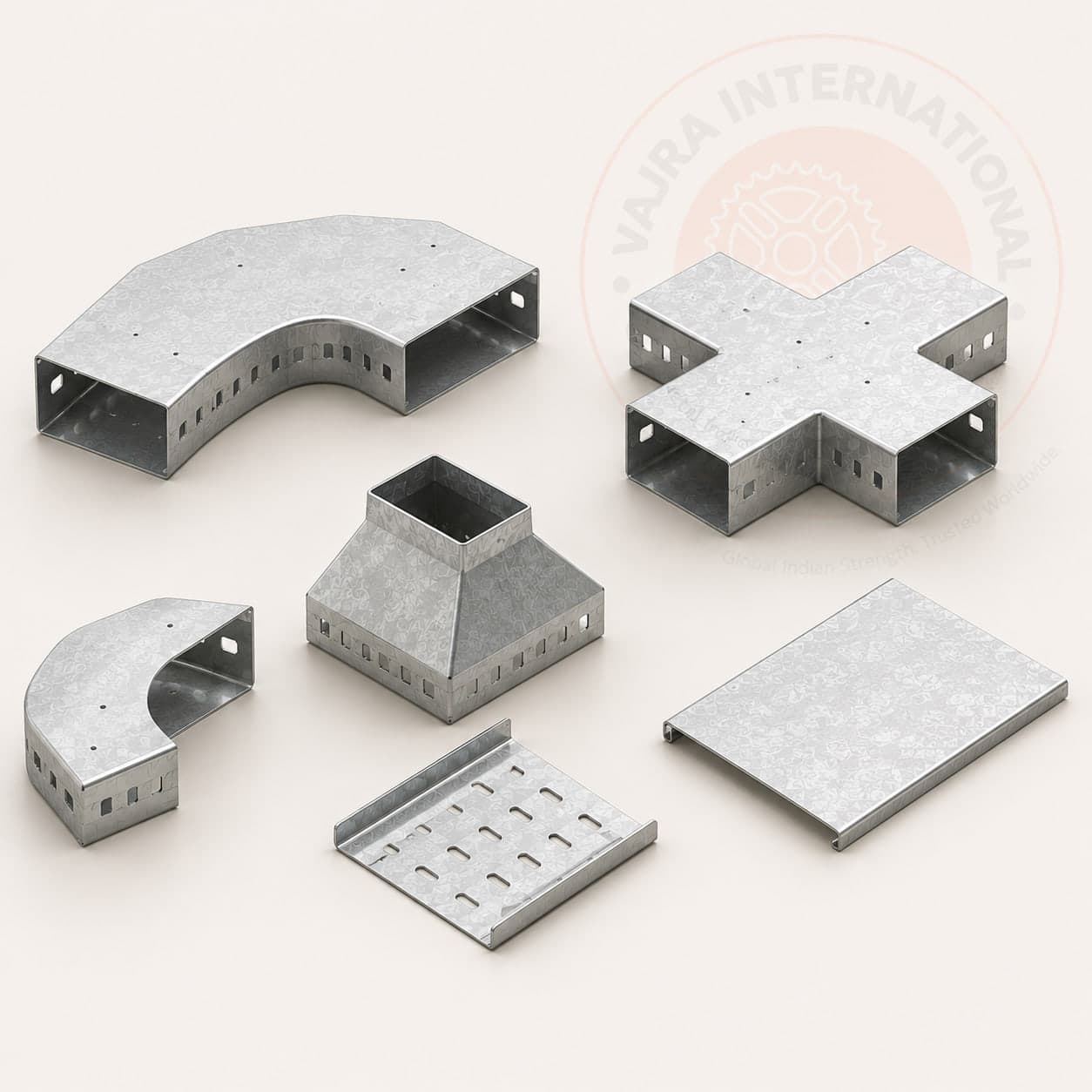
Cable Tray Accessories & Fittings
The complete fittings range, bends, tees, reducers, covers, couplers and supports, finish-matched to the tray system from one supplier.
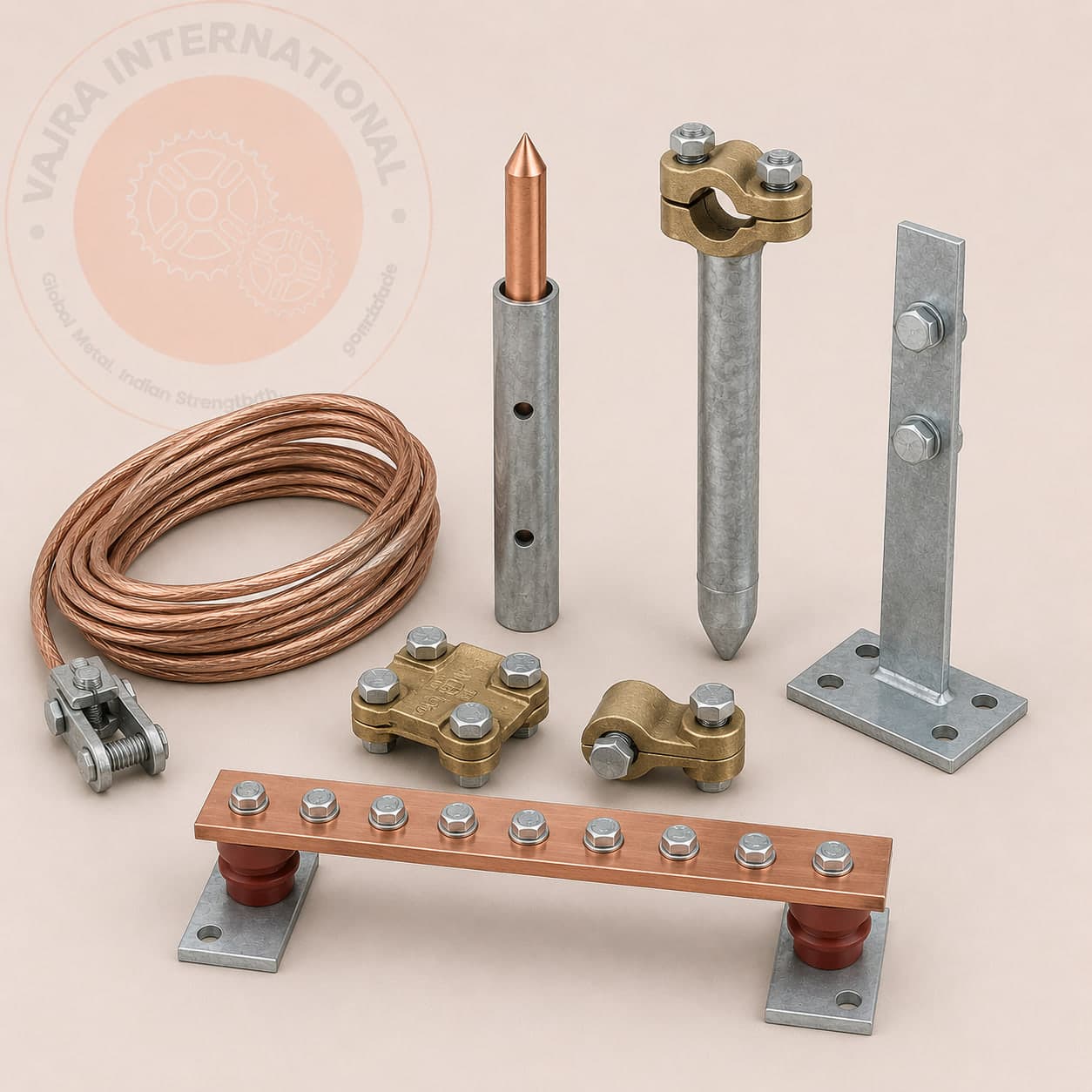
Earthing & Grounding Systems
Earthing plates, pipes, rods/electrodes, and copper/GI strips and wire for safe, low-impedance grounding of plant and buildings.
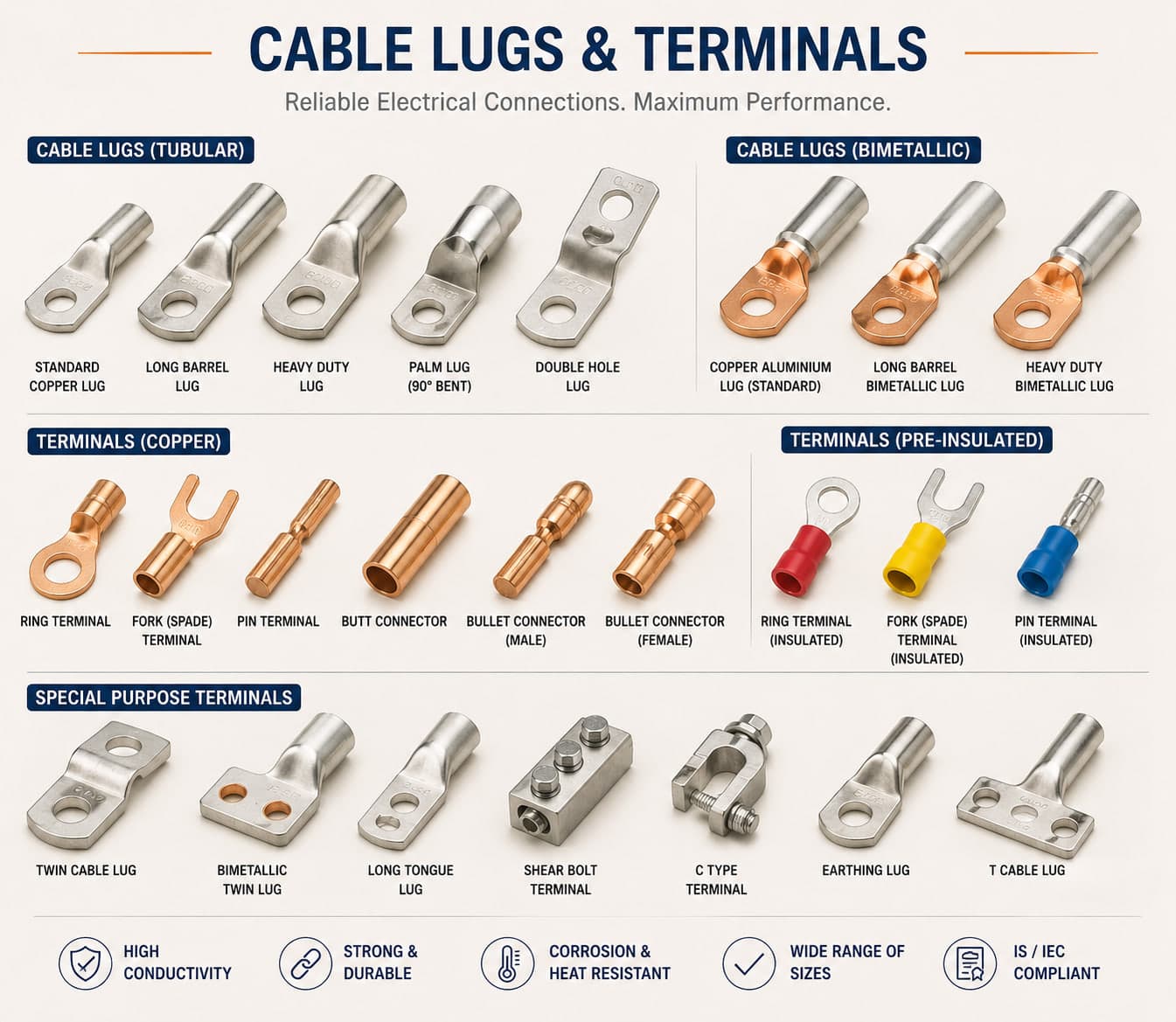
Cable Lugs & Glands
Copper and aluminium lugs plus brass cable glands for sealed, low-resistance terminations across power and control cabling.
Electrical case studies
Real export projects for this sector, with the standards and outcome specified.
Substation Earthing & Lightning Protection Systems
Provision of copper-bonded ground rods and hot-dip galvanized grounding strips for electrical safety earthing. Engineered to meet strict soil resistivity requirements.
Read case study United Arab Emirates · Data CentreHDG Cable Trays for Gulf Infrastructure Projects
Supply of heavy-duty hot-dip galvanized cable trays and custom fittings to support critical power cabling. Designed and certified to IEC 61537 and ASTM A123.
Read case studyCommon questions
IEC 61537:2006 (Cable Management Systems) defines the fill ratio as the ratio of total cable cross-sectional area installed in the tray to the tray's usable internal cross-section. The standard recommends a maximum fill ratio of 40% for ladder trays and 60% for perforated trays, the difference reflects heat dissipation: open ladder rungs allow greater airflow for power cables at full load rating. A 300 mm wide × 50 mm deep ladder tray has a usable internal cross-section of approximately 13,000 mm²; at 40% fill, the maximum total cable cross-section is 5,200 mm². Why this directly affects your order: over-filling a tray reduces cable current-carrying capacity. IEC 60364-5-52 Clause 7.3 applies thermal derating correction factors for grouped cables in filled trays, if fill ratio exceeds the design value, you must either derate the cable or specify a wider tray. Share your cable schedule (count and individual outer diameter) with your RFQ and our technical team returns a tray-width recommendation with fill ratio confirmation before you order.
GI earth pipes (IS 3043, 40 mm bore, 2.5 mm wall, HDG per IS 4736) are adequate for most standard applications: commercial and industrial building earthing, telecom towers, solar farm array earthing in inland sites, and power distribution substations in non-corrosive soil. The zinc coating life in standard Type C1/C2 soil (pH 6–8, moderate clay or loam, no chemical contamination) is typically 15–25 years, within the design life of most projects. Copper-bonded earth rods are the correct specification in three specific conditions: (1) Corrosive soil classified Type C3 or C4 per IS 3043 Annex D, pH below 5 or above 9, permanently waterlogged ground, high chloride or sulphate content, coastal sites within 1–2 km of the sea. In C3/C4 soil, zinc coating may be consumed in 5–10 years; copper corrodes at <0.002 mm/year and lasts the full project design life. (2) High fault current installations. HV substations where earth fault current exceeds 1,000 A require copper conductors per IS 3043 for adequate fault current capacity. (3) Earthing under permanent structures, if the electrode is buried under a concrete slab or road where excavation and replacement is impractical, the premium for copper over the full project life is far lower than the replacement cost. If your project specification simply says 'copper required' without citing the IS 3043 soil classification, ask the specifying engineer to confirm which condition applies. GI is frequently over-specified as a default.
Start with the IEC 60439 free-air rating at 30°C: a 100×10 mm copper busbar is rated 960 A. At 45°C ambient, apply the de-rating factor of 0.91, giving 960 × 0.91 = 874 A, which is below 1,000 A. Step up to 120×10 mm, rated 1,150 A at 30°C: de-rated to 1,150 × 0.91 = 1,047 A at 45°C. That provides adequate margin. At 50°C (common in unair-conditioned switchrooms in Rajasthan and Gulf sites), the de-rating factor is 0.87, use 160×10 mm (1,500 A × 0.87 = 1,305 A) for a 1,000 A load at 50°C ambient. Always apply ambient de-rating: the IEC table value at 30°C is a catalogue number, not the real-world capacity at Indian or Middle Eastern ambient temperatures.
IEC 61537 defines load classes (A through E) based on the Uniformly Distributed Load (UDL) the tray carries at a given span with deflection not exceeding L/100. The maximum span depends on the tray cross-section, gauge, and cable load, not a fixed number. For a standard 300 mm wide, 1.5 mm gauge ladder tray at a 3,000 mm span: rated at approximately 85 kg/m UDL (Class B). In practice: light loading (control cables, fill <40%) supports 3,000 mm spans; heavy power cable runs (35 mm² and above) typically require 1,500–2,000 mm spans to stay within Class C or D ratings. Vertical runs: halve the horizontal rated span. At bends and fittings: add a support within 300 mm either side. The span table from the tray manufacturer is authoritative, never use a rule-of-thumb without checking the actual UDL against the rated span.
A complete cable tray installation requires six accessory categories beyond the straight tray sections: (1) Fittings, inside bends, outside bends, tees, crosses, and reducers (to change direction and width at junctions). (2) Splice plates (couplers), bolted joining plates connecting tray sections end-to-end; ARAMCO and Gulf specifications require stainless steel couplers. (3) Support brackets, cantilever wall brackets, trapeze brackets and Unistrut channel clips to fix the tray to walls, ceilings or steelwork. (4) Bonding conductors, a 4 mm² minimum copper bonding wire must run across each coupler in classified areas and is best practice everywhere. (5) End caps and cable clamps, close open ends of trays at termination points; secure cable bundles at intervals per IEC 61537. (6) Cable entry hoods and reducers, smooth cable entry from conduit or wall penetrations without sharp edge contact. Vajra supplies a full accessory range matched to every tray width and finish in our catalogue. The most common procurement error is ordering tray without matching accessories, quantities for bends and tees are typically derived from the installation drawing set.
Vajra International is a direct manufacturer of industrial electrical, structural, and precision metal systems, cable trays, earthing and grounding, copper busbars, electroforged gratings, fabricated steel and towers, solar mounting structures, and CNC machined and sheet-metal components, across mild steel, stainless steel, aluminium and copper.
Procurement guides for electrical
Importing Cable Trays from India: A Buyer's Guide
How to specify, price, certify and ship cable tray from India, written by a manufacturer. Types, finishes, the standards that matter, what drives cost, and the mistakes that cost importers money.
Read guide Cornerstone Guide · 10 min readSourcing Earthing & Grounding Systems from India: A Buyer's Guide
How to specify, price and import earthing electrodes, plates, rods and strip from India, electrode types, the IS 3043 / IEC 62561 standards, material choices, what documentation to require, and the mistakes that create hidden re-grounding costs.
Read guideEngineering resources for electrical
India's Cable Tray Manufacturing Sector: A Buyer's Sourcing Guide
A structured look at India's cable tray manufacturing landscape, covering where the production clusters are, what certifications to demand, and how to evaluate a factory before placing an export order.
Read guide Export IntelligenceCable Tray Manufacturer in Kolkata and Howrah: Factory Direct Sourcing
A sourcing reference for project buyers looking at cable tray supply from Kolkata and Howrah. Covers the geography, what factories actually make here, and how to engage a West Bengal manufacturer directly for export orders.
Read guide Technical GuideLadder Cable Tray vs Perforated Cable Tray: Selection Guide
A side-by-side comparison of ladder and perforated cable tray covering load capacity, ventilation, cable type suitability, installation cost, and the IEC 61537 requirements that apply to each. Use this guide to confirm your selection before specifying to project drawings.
Read guideSupplying electrical? Let's scope it.
Send drawings, a BOQ, or a simple description. You'll get a structured quotation covering specification, finish, lead time and Incoterms, from the manufacturer, not a middleman.
- MTC · COO · inspection reports
- ±0.01 mm precision · in-house QA
- FOB · CIF · CFR to all major ports