

Infrastructure & EPC
Structural steel, gratings, flooring and support systems for infrastructure and EPC contractors.
What this sector needs
EPC contractors consolidate project metalwork with Vajra — structural fabrication, gratings, industrial flooring and support systems — delivered from prototype quantities to full container loads.
Product lines for this sector
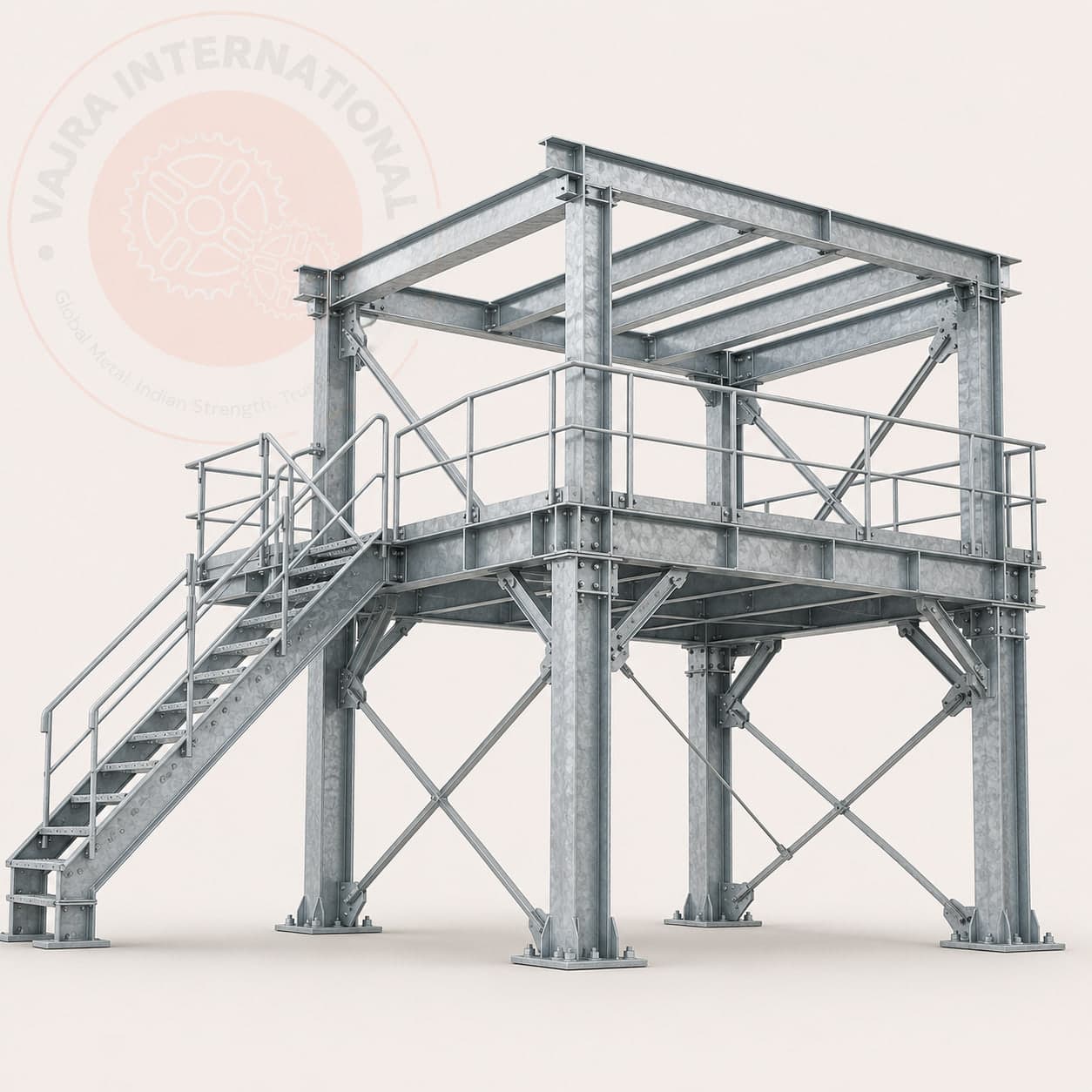
Custom Structural Steel Work
Built-up sections, plate girders, brackets and heavy fabrications welded to drawing by qualified procedures.
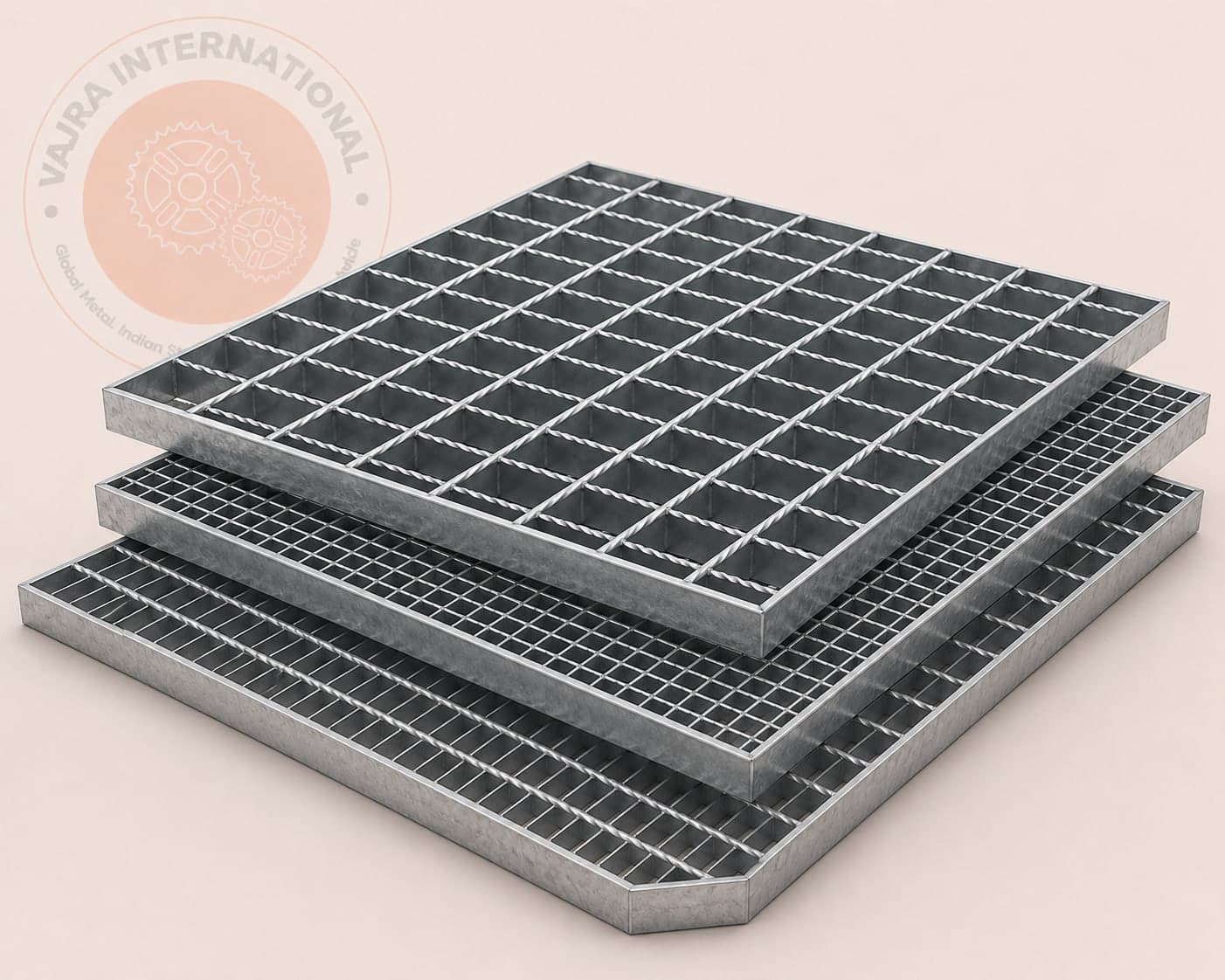
Electroforged Gratings
Electroforged and press-locked steel gratings to IS 2713 for walkways, platforms and industrial flooring, galvanized for service life.
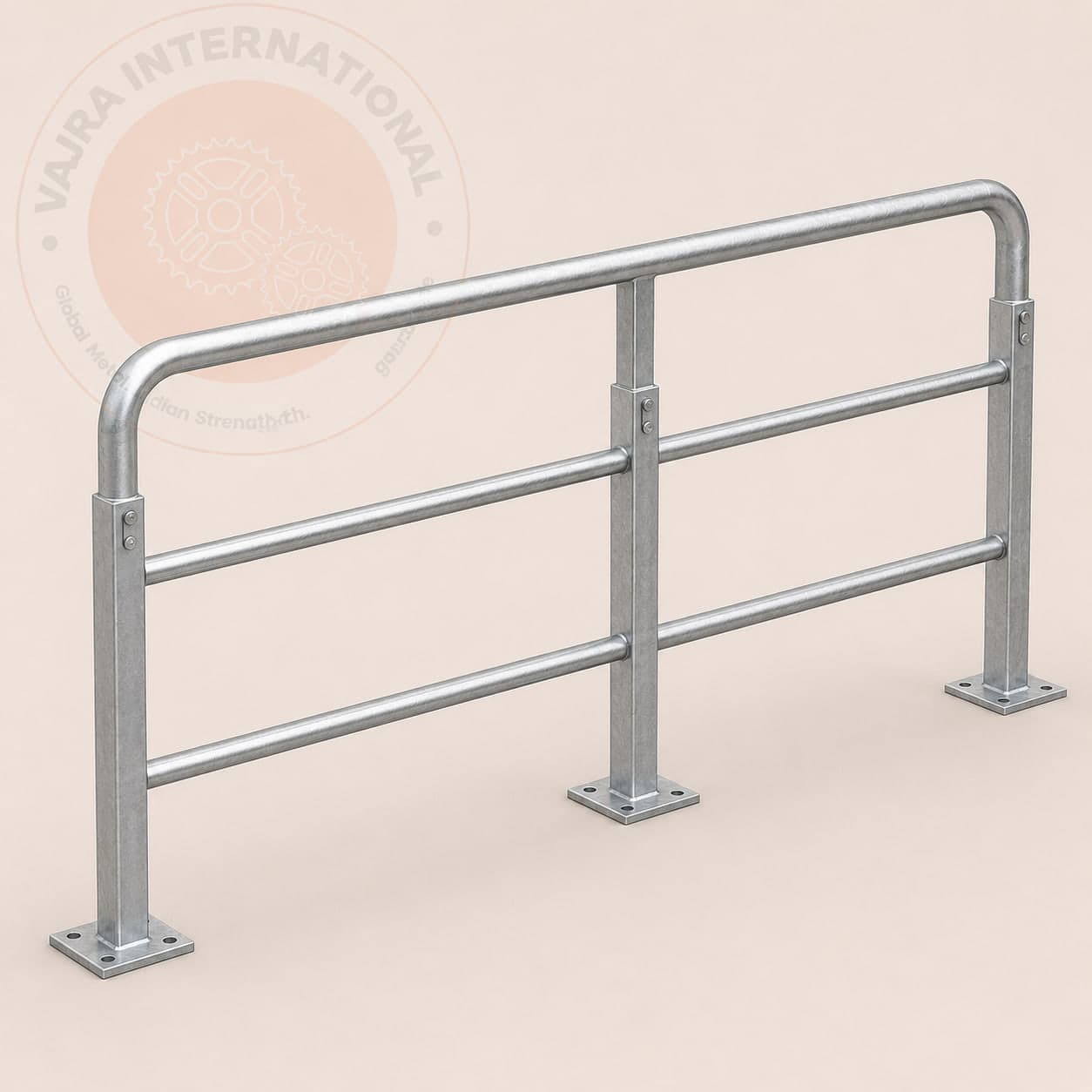
Industrial Flooring Systems
Chequered plate, grating flooring and platform systems for plant floors, mezzanines and access decks.
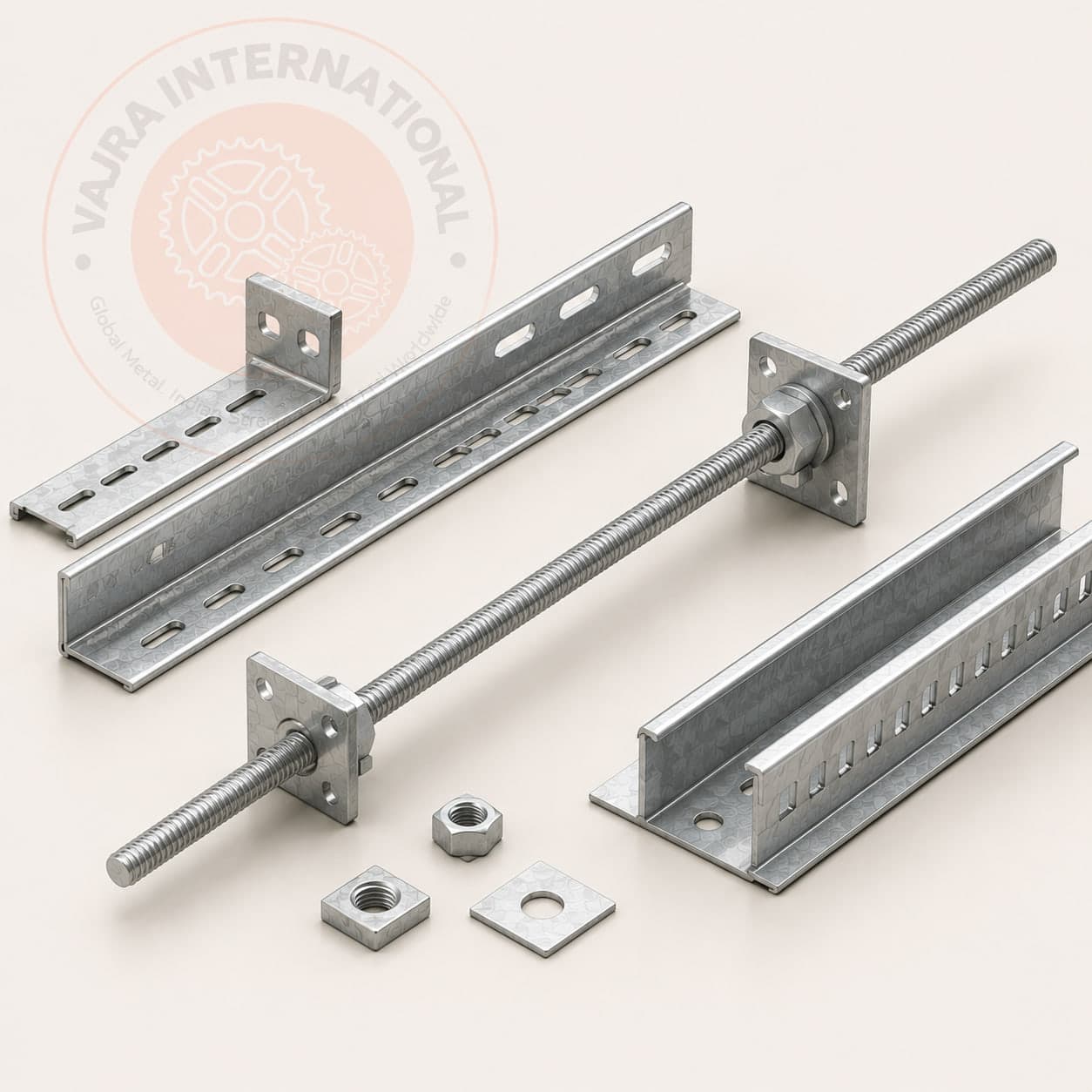
Fabricated Steel Supports & Frames
Cable-support structures, pipe racks, equipment frames and skids fabricated and galvanized to project drawings.
Infrastructure case studies
Real export projects for this sector, with the standards and outcome specified.
Common questions
Load capacity depends on bearing bar section, span and load type. Key reference values to BS 4592 / IS 2713: 25×5 mm bars at 1,000 mm span → approximately 4.5 kN/m² UDL (pedestrian walkways); 38×5 mm bars at 1,000 mm span → approximately 10 kN/m² UDL (industrial platforms with equipment); 50×6 mm bars at 600 mm span → approximately 28 kN/m² (forklift rated). These are approximate, actual values depend on steel grade (IS 2062 Gr. A or B) and electroforged weld quality. We provide load tables and can run a BS 4592 calculation for your specific span, load and bearing bar selection before you order.
IEC 61537:2006 (Cable Management Systems) defines the fill ratio as the ratio of total cable cross-sectional area installed in the tray to the tray's usable internal cross-section. The standard recommends a maximum fill ratio of 40% for ladder trays and 60% for perforated trays, the difference reflects heat dissipation: open ladder rungs allow greater airflow for power cables at full load rating. A 300 mm wide × 50 mm deep ladder tray has a usable internal cross-section of approximately 13,000 mm²; at 40% fill, the maximum total cable cross-section is 5,200 mm². Why this directly affects your order: over-filling a tray reduces cable current-carrying capacity. IEC 60364-5-52 Clause 7.3 applies thermal derating correction factors for grouped cables in filled trays, if fill ratio exceeds the design value, you must either derate the cable or specify a wider tray. Share your cable schedule (count and individual outer diameter) with your RFQ and our technical team returns a tray-width recommendation with fill ratio confirmation before you order.
No. ESE air terminals are not recognised by IEC 62305-3 as providing any extended zone of protection beyond a conventional Franklin rod. IEC 62305-3:2010 Annex A explicitly states that no enhanced or early streamer terminal type has demonstrated consistent, repeatable protection improvement under controlled test conditions. ESE terminals are recognised by NFC 17-102 (French standard) and UNE 21186 (Spanish standard), and are commercially common in GCC markets where the French standard is sometimes accepted by local authorities. However: if your project specification cites IEC 62305 as the design basis, which most EPC contracts in the Gulf, Australia, UK and Southeast Asia do, a lightning protection design built solely on ESE terminals will not pass technical review by an IEC-competent engineer. The risk: designing the system on ESE-claimed protection radii (typically 40–60 m claimed for LPL I ESE terminals vs 20 m for conventional) means the system is physically under-specified if ESE performance is not validated for your LPL. Specify conventional Franklin rods with rolling sphere positioning analysis unless the authority having jurisdiction explicitly permits NFC 17-102 or UNE 21186 as the design basis.
AS 1657 (Fixed Platforms, Walkways, Stairways and Ladders. Design, Construction and Installation) is the governing Australian standard for industrial grating used in personnel walkways and platforms. Key differences from BS 4592: AS 1657 specifies a deflection limit of L/120 under working load, compared to BS 4592's more conservative L/200. This does not mean Australian grating is under-designed, it reflects different design philosophy and code tradition; the structural section is still adequate for the specified load. AS 1657 also specifies maximum opening dimension for heel-safe surfaces: 35×35 mm maximum. In practice this means a maximum cross-bar pitch of 50 mm for walkways where heel-safe is mandatory, which it is on all personnel access platforms in Australian mining sites. BHP, Rio Tinto and Fortescue site specifications universally require heel-safe (50 mm cross-bar pitch) for all personnel walkways. ASTM A123 Grade 85 HDG is the coating standard specified by major Australian mining clients for external gratings. 85 µm average zinc coating minimum, significantly higher than IS 4759's 70 µm average. Third-party coating inspection with actual measurement data (not a compliance statement) is typically required before shipment for Australian mining project supply.
IEC 61537 defines load classes (A through E) based on the Uniformly Distributed Load (UDL) the tray carries at a given span with deflection not exceeding L/100. The maximum span depends on the tray cross-section, gauge, and cable load, not a fixed number. For a standard 300 mm wide, 1.5 mm gauge ladder tray at a 3,000 mm span: rated at approximately 85 kg/m UDL (Class B). In practice: light loading (control cables, fill <40%) supports 3,000 mm spans; heavy power cable runs (35 mm² and above) typically require 1,500–2,000 mm spans to stay within Class C or D ratings. Vertical runs: halve the horizontal rated span. At bends and fittings: add a support within 300 mm either side. The span table from the tray manufacturer is authoritative, never use a rule-of-thumb without checking the actual UDL against the rated span.
Metro station platforms and maintenance access walkways in India follow IS 2713 (electroforged gratings) as the primary standard, with DMRC and most state metro authorities also referencing BS 4592 for cross-checking load class and deflection. Heel-safe is mandatory on all passenger access areas: the maximum opening dimension is 35×35 mm, achieved by specifying a 50 mm or 40 mm cross-bar pitch. Load class for platform edge and maintenance walkways: minimum 4.5 kN/m² UDL (Class W / pedestrian loading per IS 2713). For maintenance vehicle access within depots, 15–28 kN/m² (forklift-rated sections) are required. Surface finish: hot-dip galvanized IS 4759 for external and exposed areas; natural mill finish with anti-slip nosing strips for indoor depot platforms. Vajra supplies electroforged grating panels cut to size with swaged end flats and recessed fixings for platform applications.
Procurement guides for infrastructure
Engineering resources for infrastructure
Cable Tray Support Systems: Cantilever Arms, Strut Channel and the Spacing That Holds the Run
A cable tray does not hold cable up. The support holds the tray up. When a run sags, the tray is usually fine and the bracket, the span or the wall fixing was the weak link. How to get all three right.
Read guide ExportThird-Party Inspection for Steel Exports: How SGS, BV and Intertek Stages Actually Work
A TPI clause reads like a threat to first-time exporters. It is the opposite. Set up properly it protects the supplier too, because once the inspector signs, the quality argument is over and the goods ship.
Read guide ExportExport Packing for Steel: Anti-Corrosion, Crating and Loading a Container That Arrives Clean
Steel can survive a six-week voyage in perfect condition or arrive a rusty, dented mess, and the difference is almost entirely the packing. Beating container sweat, salt and rough handling, in order.
Read guideSupplying infrastructure? Let's scope it.
Send drawings, a BOQ, or a simple description. You'll get a structured quotation covering specification, finish, lead time and Incoterms, from the manufacturer, not a middleman.
- MTC · COO · inspection reports
- ±0.01 mm precision · in-house QA
- FOB · CIF · CFR to all major ports