

Oil, Gas & Refineries
Hot-dip galvanized trays, gratings, supports and hazardous-area glands for refinery and process environments.
What this sector needs
Process and hydrocarbon environments need corrosion-rated metalwork. Vajra supplies HDG cable trays, gratings, pipe-rack supports and flameproof-rated glands for refinery and offshore work.
Product lines for this sector
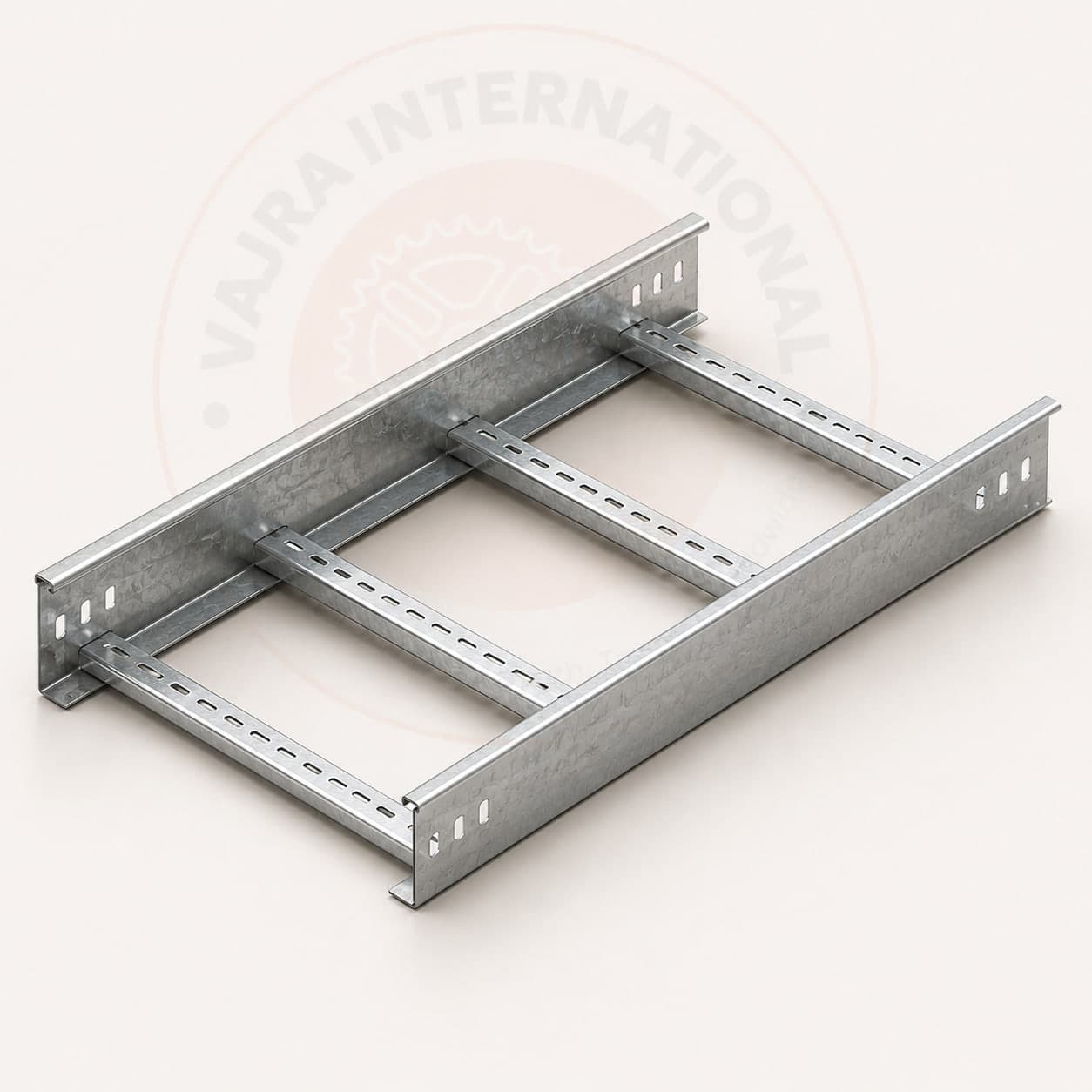
Cable Trays
Ladder, perforated, and raceway cable trays roll-formed in MS, GI, SS and aluminium, sized and finished to project load and environment.
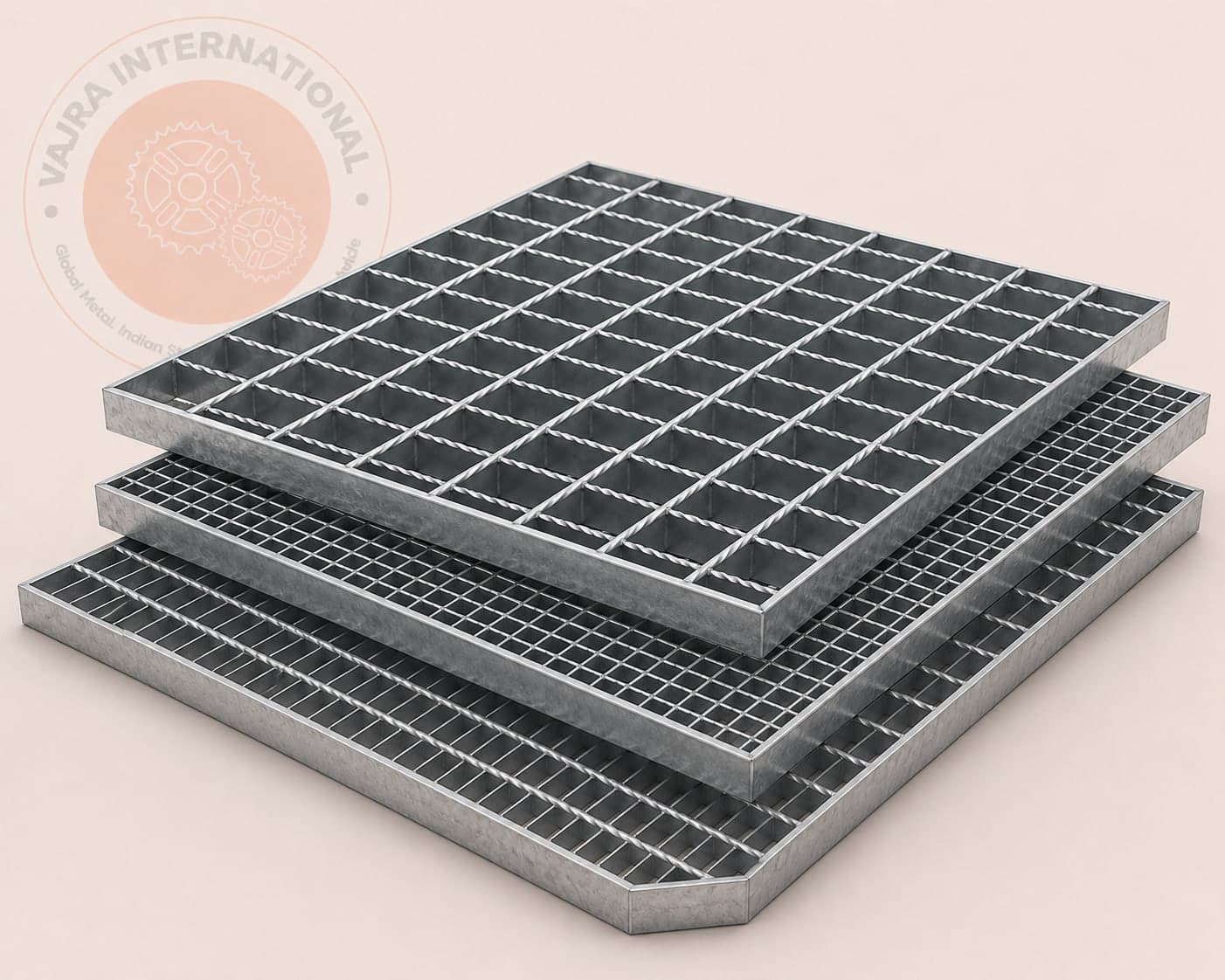
Electroforged Gratings
Electroforged and press-locked steel gratings to IS 2713 for walkways, platforms and industrial flooring, galvanized for service life.
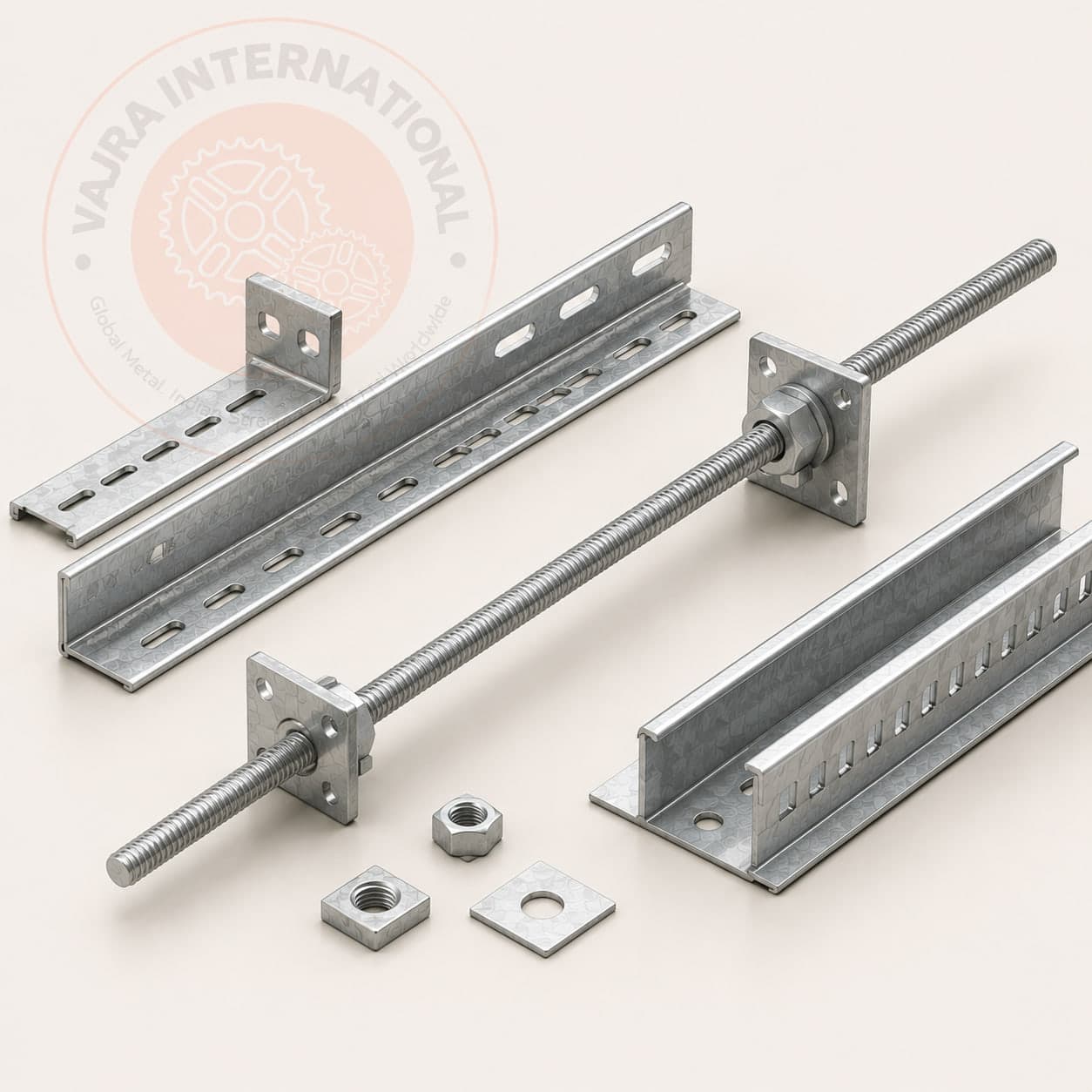
Fabricated Steel Supports & Frames
Cable-support structures, pipe racks, equipment frames and skids fabricated and galvanized to project drawings.
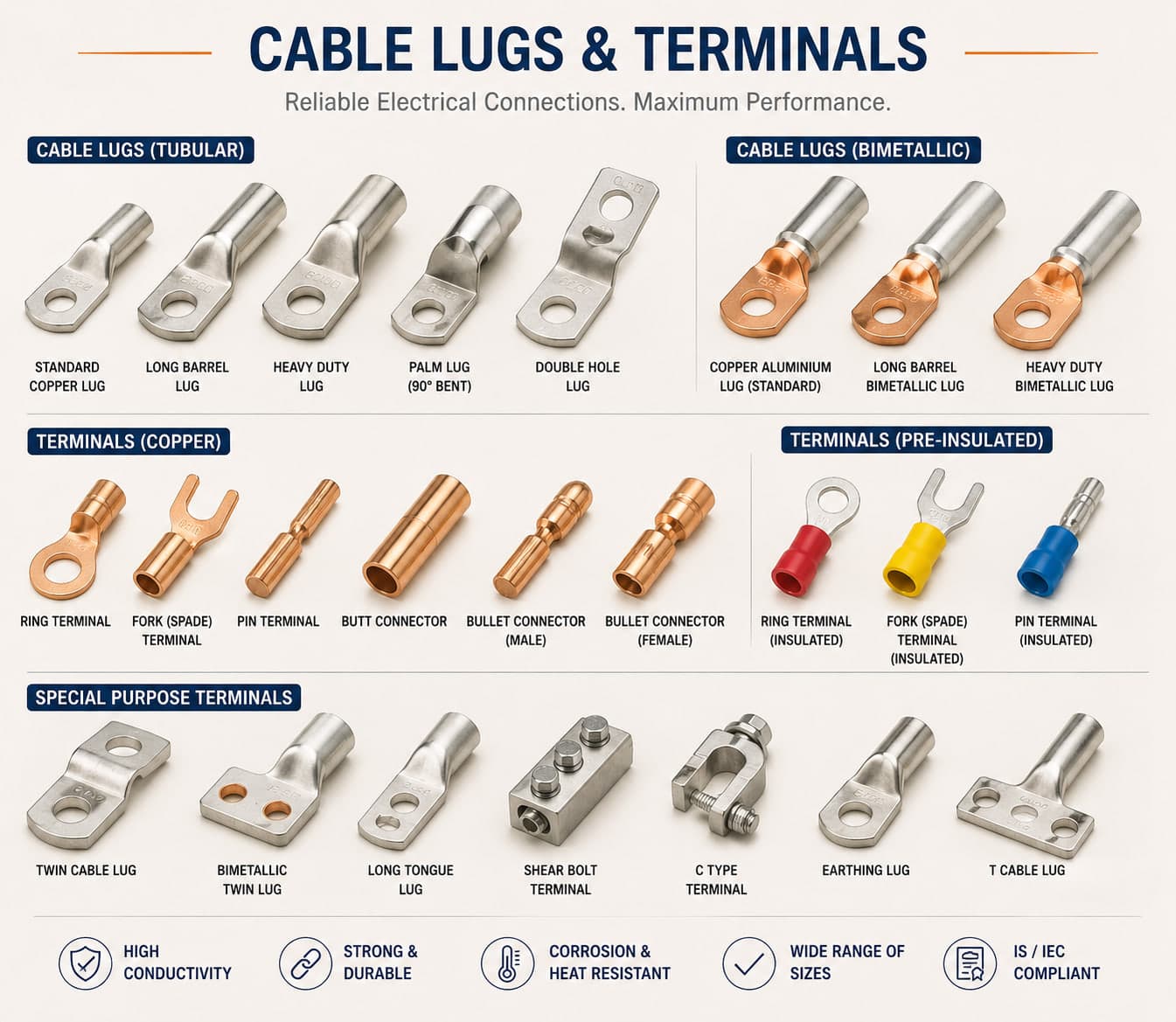
Cable Lugs & Glands
Copper and aluminium lugs plus brass cable glands for sealed, low-resistance terminations across power and control cabling.
Oil & Gas case studies
Real export projects for this sector, with the standards and outcome specified.
Common questions
Load capacity depends on bearing bar section, span and load type. Key reference values to BS 4592 / IS 2713: 25×5 mm bars at 1,000 mm span → approximately 4.5 kN/m² UDL (pedestrian walkways); 38×5 mm bars at 1,000 mm span → approximately 10 kN/m² UDL (industrial platforms with equipment); 50×6 mm bars at 600 mm span → approximately 28 kN/m² (forklift rated). These are approximate, actual values depend on steel grade (IS 2062 Gr. A or B) and electroforged weld quality. We provide load tables and can run a BS 4592 calculation for your specific span, load and bearing bar selection before you order.
IEC 61537:2006 (Cable Management Systems) defines the fill ratio as the ratio of total cable cross-sectional area installed in the tray to the tray's usable internal cross-section. The standard recommends a maximum fill ratio of 40% for ladder trays and 60% for perforated trays, the difference reflects heat dissipation: open ladder rungs allow greater airflow for power cables at full load rating. A 300 mm wide × 50 mm deep ladder tray has a usable internal cross-section of approximately 13,000 mm²; at 40% fill, the maximum total cable cross-section is 5,200 mm². Why this directly affects your order: over-filling a tray reduces cable current-carrying capacity. IEC 60364-5-52 Clause 7.3 applies thermal derating correction factors for grouped cables in filled trays, if fill ratio exceeds the design value, you must either derate the cable or specify a wider tray. Share your cable schedule (count and individual outer diameter) with your RFQ and our technical team returns a tray-width recommendation with fill ratio confirmation before you order.
Cable trays are passive components and are not classified as electrical equipment under IEC 60079, they do not carry ATEX or IECEx certification marks. Compliance in Zone 1 and Zone 2 classified areas is achieved through the installation method, not through certification of the tray itself. What the standard (IEC 60079-14 Cl. 9.3.4) requires: all metallic cable management in a classified area must be electrically continuous and bonded to the facility earthing system, to prevent static charge accumulation that could create an ignition source. In practice this means: (1) A 4 mm² minimum copper bonding conductor must run across every tray joint coupler, bolt connections through coupler plates alone are not sufficient. (2) The tray run must be connected to the main earthing system at both ends, with intermediate bonds at ≤30 m intervals for runs exceeding 30 m. (3) Hot-dip galvanized mild steel or fibreglass (GRP) are the accepted tray materials in most Gulf and international classified area specifications. ARAMCO SAES-P-104 adds specific fill ratio and support spacing requirements beyond IEC.
Saudi Aramco Engineering Standard SAES-P-104 (Design and Installation of Cable Management Systems) specifies: material, hot-dip galvanized mild steel (for power and earthing runs) or fibreglass GRP (for instrumentation in classified areas); maximum fill ratio, 50% (more conservative than IEC 61537's 40% for ladder trays); support spacing, maximum 1,500 mm between bracket centres for horizontal runs, 900 mm for vertical runs; bonding, stainless steel bonding links across every tray joint, not clip-type spring connectors. Documentation required for ARAMCO project submissions: EN 10204 Type 3.1 MTC for the tray steel, HDG coating inspection report per ASTM A123 with actual XRF measurement values, dimensional inspection report confirming sheet thickness and rung pitch, and an engineering data sheet in ARAMCO-compatible format. Note: for named ARAMCO projects, suppliers must typically obtain project-specific approval against SAES-A-004 (Approved Vendor List), this is a pre-qualification process, not a standing product approval. We have prepared SAES-P-104 compliant document packages for EPC contractors on multiple ARAMCO project submissions.
IEC 62305-3 defines four Lightning Protection Levels (LPL) based on the rolling sphere radius and collection efficiency required to intercept lightning strokes before they reach the protected structure. LPL I uses a 20 m rolling sphere (collection efficiency ≥98%) and is required for structures with the highest consequence of lightning strike: petrochemical facilities, explosive materials stores, critical data centres, and hospitals. LPL II uses a 30 m sphere (95% efficiency) and applies to large public buildings and industrial facilities with fire risk. LPL III uses a 45 m sphere (90%) for commercial warehouses and manufacturing facilities without explosive content. LPL IV uses a 60 m sphere (80%) for residential and low-risk structures. The practical implication: smaller rolling sphere radius = air terminals positioned closer together, more down conductors (one per 10 m perimeter for LPL I and II; one per 15 m for LPL III and IV), and deeper earth termination. Any structure with flammable, explosive or high-value content must be classified LPL I or II minimum, including rooftop inverter rooms on commercial buildings and substation control buildings. The LPL classification drives the entire material schedule: conductor sizing, earth electrode depth, and surge protection device rating.
No. ESE air terminals are not recognised by IEC 62305-3 as providing any extended zone of protection beyond a conventional Franklin rod. IEC 62305-3:2010 Annex A explicitly states that no enhanced or early streamer terminal type has demonstrated consistent, repeatable protection improvement under controlled test conditions. ESE terminals are recognised by NFC 17-102 (French standard) and UNE 21186 (Spanish standard), and are commercially common in GCC markets where the French standard is sometimes accepted by local authorities. However: if your project specification cites IEC 62305 as the design basis, which most EPC contracts in the Gulf, Australia, UK and Southeast Asia do, a lightning protection design built solely on ESE terminals will not pass technical review by an IEC-competent engineer. The risk: designing the system on ESE-claimed protection radii (typically 40–60 m claimed for LPL I ESE terminals vs 20 m for conventional) means the system is physically under-specified if ESE performance is not validated for your LPL. Specify conventional Franklin rods with rolling sphere positioning analysis unless the authority having jurisdiction explicitly permits NFC 17-102 or UNE 21186 as the design basis.
Procurement guides for oil & gas
Sourcing Electroforged Gratings from India: A Buyer's Guide
How to specify, price and import electroforged gratings from India, load bar and cross bar dimensions, the IS 5512 / BS 4592 standards, finishes, load ratings, what documentation to require, and the mistakes that create costly replacements.
Read guide Cornerstone Guide · 11 min readImporting Cable Trays from India: A Buyer's Guide
How to specify, price, certify and ship cable tray from India, written by a manufacturer. Types, finishes, the standards that matter, what drives cost, and the mistakes that cost importers money.
Read guideEngineering resources for oil & gas
India's Cable Tray Manufacturing Sector: A Buyer's Sourcing Guide
A structured look at India's cable tray manufacturing landscape, covering where the production clusters are, what certifications to demand, and how to evaluate a factory before placing an export order.
Read guide Export IntelligenceCable Tray Manufacturer in Kolkata and Howrah: Factory Direct Sourcing
A sourcing reference for project buyers looking at cable tray supply from Kolkata and Howrah. Covers the geography, what factories actually make here, and how to engage a West Bengal manufacturer directly for export orders.
Read guide Technical GuideLadder Cable Tray vs Perforated Cable Tray: Selection Guide
A side-by-side comparison of ladder and perforated cable tray covering load capacity, ventilation, cable type suitability, installation cost, and the IEC 61537 requirements that apply to each. Use this guide to confirm your selection before specifying to project drawings.
Read guideSupplying oil & gas? Let's scope it.
Send drawings, a BOQ, or a simple description. You'll get a structured quotation covering specification, finish, lead time and Incoterms, from the manufacturer, not a middleman.
- MTC · COO · inspection reports
- ±0.01 mm precision · in-house QA
- FOB · CIF · CFR to all major ports