
Kenya is East Africa's largest importer of Indian electrical infrastructure material. The two primary demand drivers in 2025–2030 are the KETRACO National Transmission Grid Expansion Project (connecting county headquarters and extending 400 kV lines to Tanzania, Uganda and Ethiopia interconnects) and KenGen's geothermal expansion at the Olkaria complex in the Rift Valley. Both programmes are funded partly by World Bank and African Development Bank lending, which brings procurement standards aligned to international specifications, making Indian manufacturers competitive on price and documentation.
KETRACO: national transmission grid expansion
KETRACO (Kenya Electricity Transmission Company) is the state-owned transmission operator tasked with building and operating the national high-voltage grid. Current KETRACO capital projects include the 400 kV Nairobi–Naivasha–Lessos backbone transmission line, 132 kV lines connecting county headquarters across Kenya, and new grid substations at strategic load centres. These projects require large volumes of cable management (cable trays for substation control rooms and protection panels), earthing systems (IEC 62305/BS 7430-compliant substation earth grids), and galvanized structural steel for substation buildings and gantry structures. KETRACO procures through international competitive tendering, the large civil and electrical EPC contractors (including Sinohydro, China Electric Power Equipment and Technology, and local firms like the Joint Building & Construction) are the direct procurement channel for Indian electrical infrastructure suppliers.
KenGen geothermal projects at Olkaria
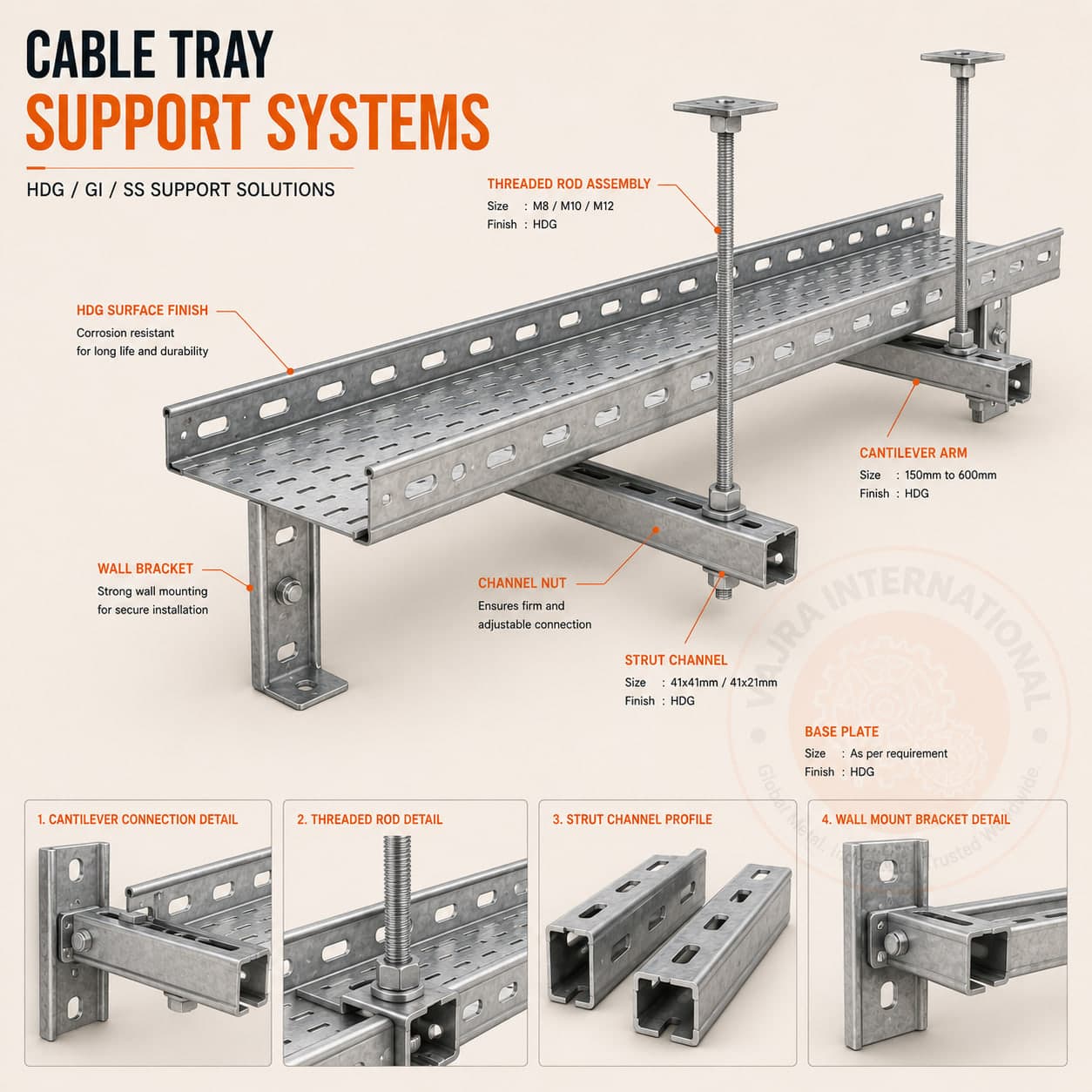
Kenya Electricity Generating Company (KenGen) operates approximately 1,800 MW of installed capacity, primarily geothermal at Olkaria (Naivasha, Rift Valley). The Olkaria V geothermal project (158 MW) was commissioned in 2019. KenGen's ongoing expansion, Olkaria VI (140 MW, due 2026) and Menengai geothermal (105 MW through GDC/IPPs), involves significant electrical infrastructure procurement. Geothermal power plants have high cable management requirements: corrosive hydrogen sulphide (H2S) atmosphere at the wellpad and steam gathering system requires HDG cable trays with a minimum 85 µm coating, and some applications require stainless steel fittings. Earthing for geothermal wellpads follows BS 7430 ground contact requirements.
Nairobi real estate and industrial parks: the private demand
Beyond utility procurement, Nairobi's construction boom, including Tatu City (Ruiru), Tilisi Industrial Park, Infinity Business Park and the expansion of Nairobi CBD commercial buildings, creates a secondary demand for cable trays, perforated and ladder type, for MEP fit-outs. This market buys through Nairobi electrical trading houses and local M&E contractors. Cable trays for commercial building fit-out in Kenya are almost entirely perforated type (cheaper, fits standard British building practice) rather than ladder, and the specification is typically IEC 61537 or a proprietary building specification from the architect. Indian manufacturers can supply this market through Nairobi distributors who import on their own account.
KEBS PVoC, the compliance step most Indian exporters miss
The Kenya Bureau of Standards (KEBS) requires a Pre-Export Verification of Conformity (PVoC) certificate for regulated goods shipped to Kenya. Cable trays (HS 7308.90) and steel sections (HS 7308.20) above certain thresholds are regulated under the KEBS compulsory standard list. Without a valid PVoC CoC, goods will be detained at Mombasa Port for mandatory re-inspection at the importer's cost, and release can take 3–6 weeks. The PVoC inspection is carried out at the exporter's facility (or warehouse before shipping) by a KEBS-appointed inspection body: Bureau Veritas, SGS, or Intertek. Book the inspection at least 10 days before planned loading.
The KEBS PVoC requirement catches most first-time exporters to Kenya. It is not a paperwork formality, it requires a physical inspection of goods at origin by a KEBS-appointed inspector. Plan 3–4 weeks for the inspection booking, physical visit and CoC issue.
Quoting for a KETRACO substation, KenGen geothermal or Nairobi M&E project? We supply KEBS PVoC-ready cable tray packages from Howrah, with EN 10204 Type 3.1 MTC, coating inspection report and EEPC COO. Submit your project enquiry and we'll return a quotation within 24 hours.