
Bangladesh is one of the fastest-growing markets for Indian electrical infrastructure exports. The country's power sector has expanded from approximately 4,000 MW in 2009 to over 25,000 MW by 2024, driven by BPDB (Bangladesh Power Development Board), PGCB (Power Grid Company of Bangladesh) and a large number of Independent Power Producers (IPPs). Every new generation project, transmission line and 132 kV or 33 kV distribution substation requires cable management, earthing systems and busbars. India supplies a significant share of this material due to geographic proximity (Chittagong is 3 days from Kolkata by sea), competitive pricing and the ability to match Bangladeshi specification requirements.
BPDB: utility procurement for generation and distribution
Bangladesh Power Development Board (BPDB) is the primary public utility responsible for electricity generation and distribution. BPDB operates approximately 180 power stations and procures electrical infrastructure, including cable management, earthing and busbar systems, through international competitive tenders and direct purchase from approved suppliers. For BPDB projects, the standard specifications are BPDB's own Technical Standards based on BS and IEC references. Cable trays: IEC 61537, galvanized to BS EN ISO 1461. Earthing: BS 7430 (installation standard), copper electrodes and conductors for substation earth grids. BPDB procurement is centralized through the BPDB Materials Management Department at Dhaka, importers and their suppliers must pre-qualify through BPDB's vendor registration process.
PGCB: transmission grid infrastructure
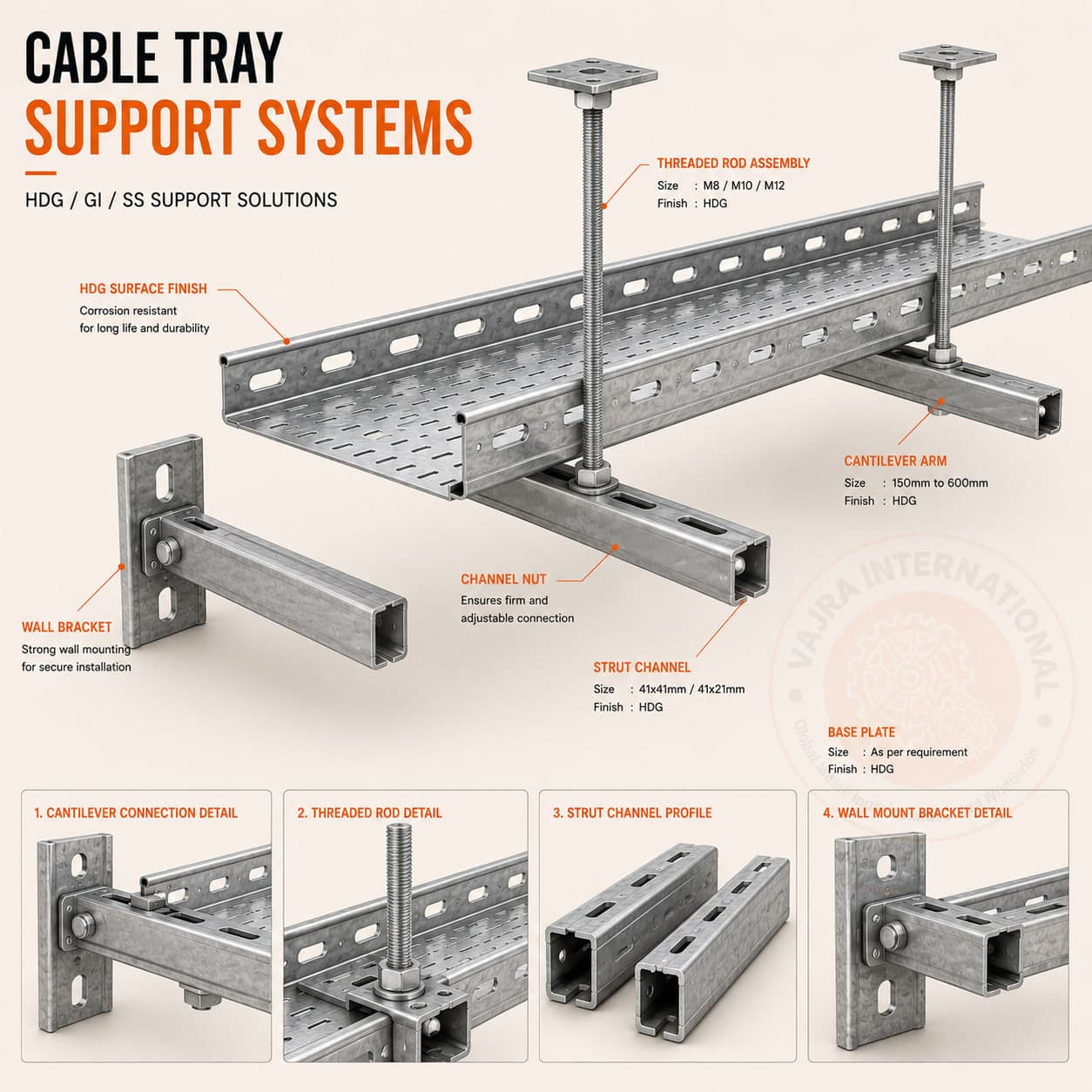
Power Grid Company of Bangladesh (PGCB) is the national transmission company, responsible for the 400 kV and 230 kV backbone grid and interconnection with India under the Bangladesh–India power trading agreement (which supplies 1,160 MW from India to Bangladesh via Baharampur–Bheramara HVDC and Tripura interconnects). PGCB capital projects include the 400 kV Dhaka–Chittagong double circuit transmission line and multiple 230 kV substation extensions. The scale of PGCB cable management requirements for a single 230 kV substation: approximately 5,000–12,000 m of cable tray in various widths (100–600 mm), plus earthing conductors, earth rods and copper busbar for the protection and control building.
Ready-made garment (RMG) factory construction: the high-volume private demand
Bangladesh's USD 47 billion ready-made garment (RMG) industry, supplying H&M, Zara, Primark and most major European and US fashion brands, is housed in approximately 4,500 export-oriented factories in Dhaka, Gazipur, Narayanganj, Chittagong and Comilla EPZs. Post-Rana Plaza (2013), the Accord on Fire and Building Safety drove a comprehensive factory safety retrofit programme covering electrical installations, including cable tray installation, earthing and bonding, and fire-rated cable containment. New factory construction for compliance with the new BGMEA building standards requires properly sized cable trays, earth bus bars and earth electrodes. This private market buys through Dhaka and Gazipur electrical wholesale markets. Indian manufacturers supply through Bengali-speaking trading companies in Dhaka.
SAFTA duty advantage: what it means in practice
Under SAFTA, India and Bangladesh have agreed to a Sensitivity List reduction schedule. For most HS 7308 (steel structures and parts) items that include cable trays, the SAFTA duty at the Bangladesh end is significantly below the MFN rate. However, Bangladesh maintains a Sensitive List that includes some steel products at 10–12% even under SAFTA, this varies by 8-digit HS code. The practical advantage: on a typical USD 80,000 cable tray shipment, a 10% duty reduction translates to USD 8,000 savings for the Bangladeshi buyer versus buying from China or Europe at full MFN rates. Combined with shorter lead time and proximity advantages, India is highly competitive in the Bangladesh cable management market.
For Bangladeshi utility buyers, the Form SAFTA COO from EEPC India is the document that unlocks the preferential duty. Ensure it is issued before the shipment departs, it cannot be backdated or re-issued after goods clear customs.
Supplying a BPDB, PGCB or garment factory project in Bangladesh? We export cable trays and earthing systems from Howrah to Chittagong and Benapole, with Form SAFTA COO, EN 10204 MTC and full Bangladesh customs documentation. Submit your specification and we'll return a quotation within 24 hours.